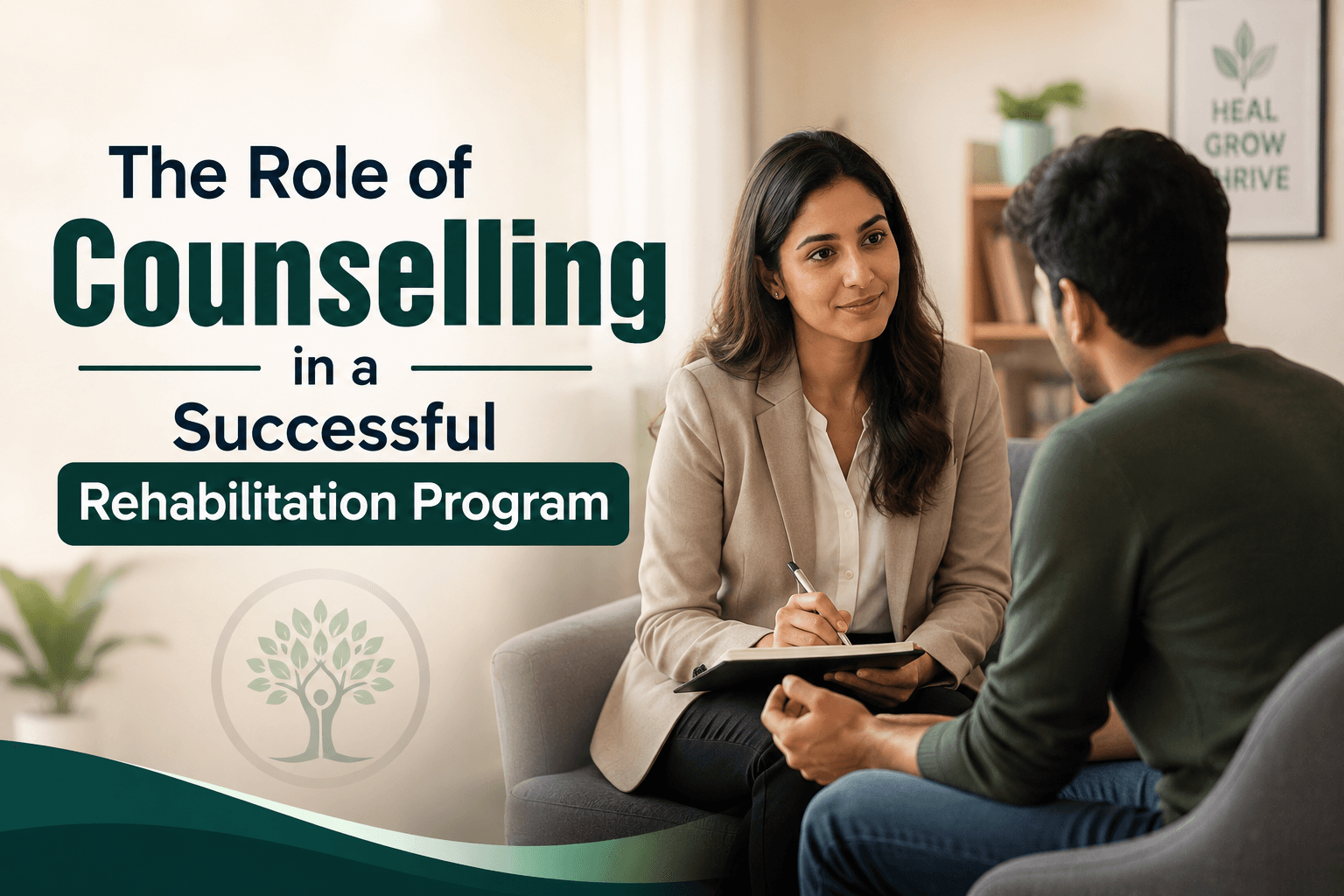
Stopping drugs or alcohol is one step. Understanding why you depended on them in the first place is another. And that second step can change everything. Addiction is rarely only about a substance. Behind it, there may be stress, loneliness, trauma, family problems, unhealthy relationships, emotional pain, or habits that have developed over many years. Removing access to drugs or alcohol may help create a safer beginning, but it does not automatically resolve the thoughts, emotions, and behaviours connected with addiction. This is where counseling becomes an important part of rehabilitation. Counselling gives people a structured and supportive space to understand themselves, recognise harmful patterns, develop healthier coping skills, and prepare for life after treatment. It is not simply about sitting in a room and talking about problems. When delivered by appropriately qualified professionals, counselling can help people work through the challenges that may otherwise put their recovery at risk.
Counselling Helps People Understand the Root of Addiction
Many people struggling with addiction know that substance use is causing problems, but they may not fully understand why they continue using. Counselling can help individuals explore the situations, emotions, and experiences connected with their substance use. For one person, it may be a way of dealing with stress. For another, it may be connected with loneliness, emotional pain, difficult relationships, or past experiences. Understanding these patterns can help a person recognise that addiction did not appear without context. Once the reasons behind certain behaviours become clearer, it may become easier to work on healthier ways of responding to them.
How Counselling Supports Addiction Recovery
| Recovery Area | Role of Counselling | Possible Benefit |
| Understanding addiction | Explores patterns behind substance use | Builds greater self-awareness |
| Managing triggers | Identifies high-risk situations | Helps prepare healthier responses |
| Emotional health | Creates space to discuss difficult feelings | Supports emotional coping |
| Craving management | Develops practical coping strategies | Helps manage difficult moments |
| Relationships | Works on communication and behaviour | May support healthier connections |
| Relapse prevention | Identifies warning signs and creates plans | Supports long-term recovery |
a. Counselling Helps Identify Personal Triggers
A trigger is anything that increases the urge to return to drugs or alcohol. Some triggers are easy to recognise, while others may be hidden within everyday routines. Stress at work, arguments at home, loneliness, certain friendships, celebrations, financial problems, or even specific places can become connected with substance use. Through counselling, individuals can look closely at when cravings appear and what happens before them. Recognising these patterns can help people prepare for difficult situations instead of being caught completely off guard. The goal is not always to avoid every trigger forever but to learn safer and healthier ways of responding when triggers appear.
b. It Teaches Healthier Ways to Handle Difficult Emotions
For some people, substance use becomes a way of escaping uncomfortable emotions. Alcohol or drugs may temporarily distract from sadness, anger, anxiety, frustration, boredom, or emotional pain. When substance use stops, those emotions do not automatically disappear. Counselling can help individuals learn to recognise what they are feeling and understand how those emotions influence their behaviour. With professional guidance, they can begin developing healthier coping strategies, such as communicating openly, setting boundaries, solving problems, practising relaxation techniques, or seeking support before emotions become overwhelming.
c. Counselling Can Help Manage Cravings
Cravings can be one of the most challenging parts of addiction recovery. A person may genuinely want to remain substance-free and still experience a powerful urge to use again. Counselling can help people understand how cravings work and identify the situations that make them stronger. Individuals can learn practical strategies for delaying action, changing their surroundings, contacting supportive people, or redirecting their attention during difficult moments. Counselling cannot guarantee that cravings will disappear, but it can help people build a collection of practical tools they can use when urges arise.
d. It Helps Change Harmful Thinking Patterns
The way people think can influence the choices they make. During addiction, certain thoughts may become common, such as “one drink will not matter,” “I cannot handle stress without using,” or “I have already failed, so there is no point trying.” These thoughts can increase the risk of returning to substance use. Counselling can help individuals recognise unhelpful thinking patterns and question whether those thoughts are realistic or useful. Over time, learning to respond differently to negative or risky thoughts may help people make healthier decisions during challenging situations.
e. Counselling Supports Better Communication
Addiction can seriously affect relationships. Broken promises, secrecy, arguments, financial problems, and loss of trust may create distance between individuals and their families. Counselling can help people look at how their behaviour has affected others while also learning healthier ways to communicate. This may include expressing feelings more clearly, listening to other people, accepting responsibility, and setting appropriate boundaries. Rebuilding relationships usually takes time, and counselling cannot instantly repair every problem. However, improving communication can create a stronger foundation for healthier relationships during and after rehabilitation.
f. It Encourages Personal Responsibility Without Judgment
Successful recovery requires people to take responsibility for their choices and actions. However, constant criticism and shame may make honest communication more difficult. Counselling aims to create a space where individuals can examine their behaviour while still being treated with respect. A counsellor can help someone recognise harmful decisions, understand their consequences, and think about what needs to change. Taking responsibility does not mean remaining trapped in guilt about the past. It means recognising what happened and making more thoughtful choices about what comes next.
g. Counselling Helps Build Confidence for Life After Rehab
Life inside a structured rehabilitation program can be very different from life outside it. After leaving rehab, individuals may return to work, family responsibilities, old neighbourhoods, and social situations where substances are available. Counselling can help people prepare for these realities before they face them. Discussing possible challenges and planning healthy responses can increase confidence. The aim is to help individuals understand that recovery is not only about staying away from substances inside a controlled environment. It is about developing skills that can be used when real-life pressures return.
The Importance of Individual Counselling
Individual counselling gives a person private time with a professional to focus on personal challenges. Some topics may be difficult to discuss in front of others, and individual sessions can provide space for deeper conversations. The counsellor can work with the individual to understand specific triggers, emotional concerns, relationships, goals, and recovery challenges. Because every person’s experience with addiction is different, individual counselling can help ensure that treatment addresses personal needs rather than following exactly the same approach for everyone.
The Role of Group Counselling
Group counselling can offer something different from individual sessions: connection with people who may understand the challenges of addiction through personal experience. Listening to others can help individuals discover new perspectives and realise they are not alone in their struggles. Group discussions may also provide opportunities to practise communication, share coping strategies, and learn from the experiences of others. When professionally guided, group counselling can become a supportive part of a wider rehabilitation program while helping participants build a sense of community.
Counselling Plays an Important Role in Relapse Prevention
Relapse prevention is not simply about telling someone never to use drugs or alcohol again. It involves understanding personal warning signs and knowing what to do when recovery becomes difficult. Counselling can help individuals recognise changes in thoughts, emotions, routines, and behaviours that may increase the risk of returning to substance use. A person can then develop a practical plan that includes coping strategies, supportive contacts, professional help, and actions to take during high-risk situations. Having a plan does not remove every risk, but it can provide direction when difficult moments occur.
Conclusion
Rehabilitation is not only about removing drugs or alcohol from someone’s life. It is also about helping that person understand themselves and build a healthier way of living. Counselling can play an important role in this process by helping individuals recognise triggers, understand emotions, change harmful thinking patterns, improve communication, manage cravings, and prepare for challenges after treatment. These skills can support recovery long after a rehabilitation program ends. At We Can Rehab, individuals and families seeking support for addiction recovery can explore professional rehabilitation services designed to encourage healthier routines and positive changes. With structured support, counselling, and continued effort, recovery can become more than simply staying away from substances. It can become an opportunity to rebuild life with greater awareness, stability, and purpose.
FAQs
1. Does We Can Rehab provide counselling as part of addiction rehabilitation?
Counselling is commonly an important part of addiction rehabilitation programs. Individuals and families can contact We Can Rehab directly to learn about the counselling services, treatment approaches, and support currently available.
2. Is individual or group counselling better for addiction recovery?
Both approaches can offer different benefits. Individual counselling focuses on personal challenges in a private setting, while group counselling can provide shared experiences and peer support. A rehabilitation professional can help determine which approach, or combination of approaches, may be suitable.
3. How long does counselling continue during rehabilitation?
The duration of counselling depends on individual needs, the severity of addiction, progress during treatment, and the rehabilitation program. Some people may also benefit from continued counselling or other support after leaving residential treatment.
4. Can family members participate in the recovery process?
Family involvement may be helpful in some situations. Depending on the program and individual circumstances, families may receive guidance about communication, boundaries, support, and recovery. Contact We Can Rehab to understand its current family involvement options.
5. How can I know if someone needs professional rehabilitation?
Warning signs may include loss of control over substance use, repeated unsuccessful attempts to stop, problems at work or home, damaged relationships, risky behaviour, withdrawal symptoms, and continued use despite serious consequences. A professional assessment can help determine what level of support may be appropriate.