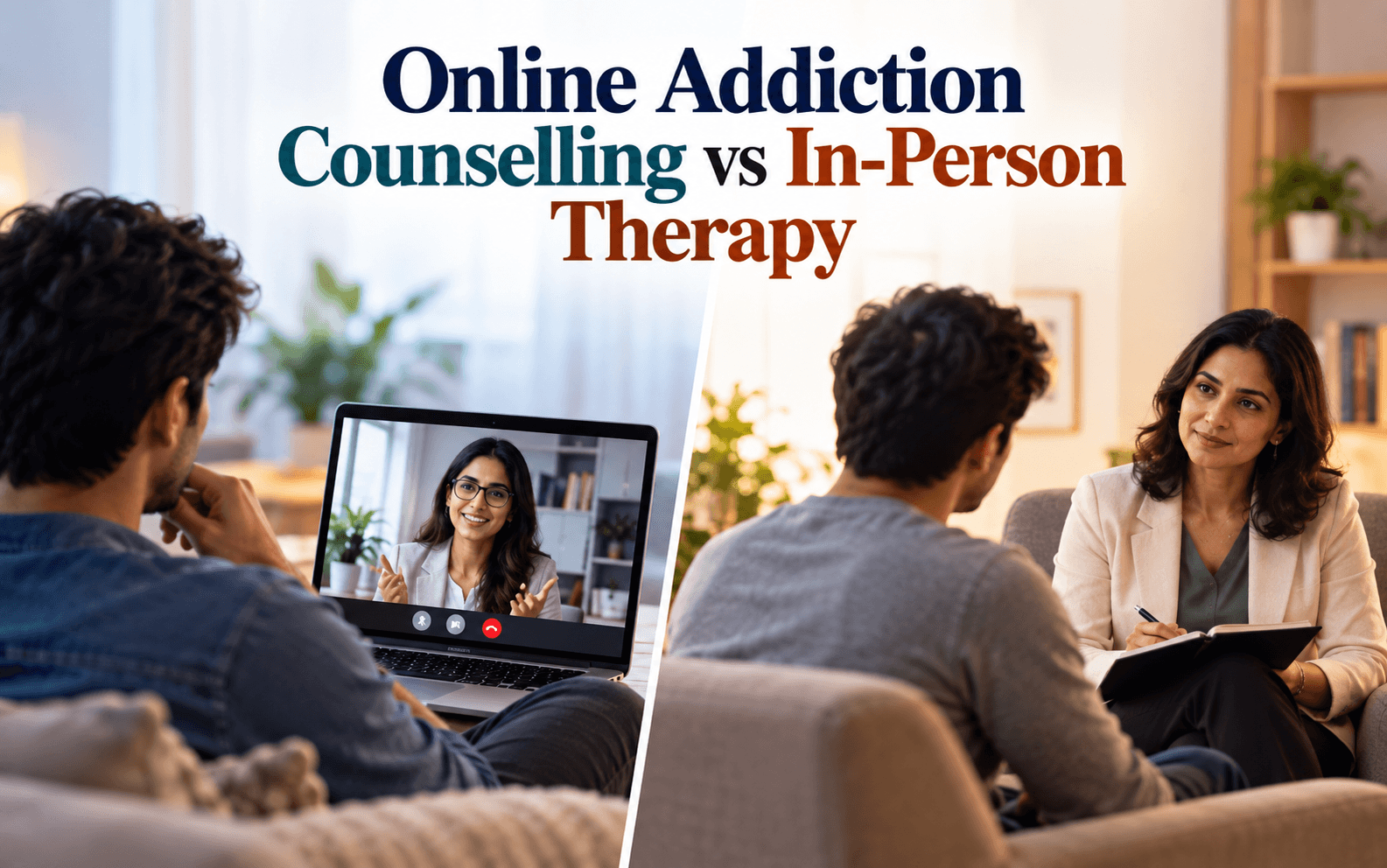
Seeking help for addiction is an important step. Once you decide to get support, you may wonder whether online counselling or in-person therapy is the right option for you. The answer is not the same for everyone. Online vs in person therapy can offer different benefits depending on your comfort level, treatment needs, daily routine, and access to professional support. Understanding how both approaches work can help you choose an option that feels practical, safe, and suitable for your recovery journey.
What Is Addiction Counselling?
Addiction counselling helps people understand the thoughts, emotions, habits, and situations connected with substance use or addictive behaviours. A counsellor can help identify triggers, develop healthier coping strategies, improve decision-making, and work toward long-term recovery. Counselling may take place individually, with family members, or in a group setting. Depending on the person’s needs, it may be provided at a rehabilitation centre, private clinic, or through digital platforms.
Online vs In Person Therapy: What Is the Difference?
Online vs in person therapy mainly differs in how the counselling sessions are delivered. Online therapy usually takes place through video calls, phone calls, or secure digital platforms. In-person therapy involves meeting a counsellor or therapist at a clinic, rehabilitation centre, or other professional setting. The core purpose remains similar: providing professional support and helping a person work through addiction-related challenges. However, the experience, accessibility, privacy, and level of direct interaction can differ.
How Does Online Addiction Counselling Work?
Online addiction counselling allows a person to communicate with a qualified counsellor without physically visiting a treatment centre. Sessions may be scheduled through video calls or other approved communication platforms. This approach can be useful for people who have difficulty travelling, live far from treatment providers, have busy schedules, or feel more comfortable starting the recovery process from a familiar environment. However, online counselling may not be suitable for every situation. People experiencing severe addiction, medical complications, withdrawal risks, or a crisis may require more intensive professional care.
How Does In-Person Addiction Therapy Work?
In-person therapy involves attending scheduled sessions at a professional treatment facility or clinic. The person meets the therapist or counsellor directly and can communicate face-to-face in a structured environment. This format may help people who prefer personal interaction or find it easier to focus when they are physically away from everyday distractions. In-person care can also make it easier for professionals to coordinate additional services when a person’s recovery requires medical, psychological, or rehabilitation support.
Online vs In Person Therapy: Which One Is More Convenient?
Convenience is one of the biggest differences when comparing online vs in person therapy. Online sessions remove the need to travel to a treatment centre. This can make regular counselling easier for people with work, family, transportation, or scheduling commitments. In-person therapy requires travel and appointment planning, but some people find that physically attending sessions creates a stronger sense of routine and commitment. The more convenient option is usually the one that allows a person to attend sessions consistently without compromising the quality or safety of care.
What Are the Benefits of Online Therapy?
Online therapy can provide several practical advantages for people seeking addiction support.
- Easy access: Sessions can be attended from a suitable private location.
- Less travel: There is no need to commute to every appointment.
- Flexible scheduling: Some providers may offer different appointment times.
- Greater comfort: People may feel more relaxed speaking from a familiar environment.
- Access to wider providers: Online services can sometimes connect people with professionals outside their immediate area.
- Continuity: Online sessions may make it easier to continue counselling when travelling or relocating.
For some people, online therapy for addiction can be a useful way to begin counselling while maintaining their regular responsibilities.
What Are the Benefits of In-Person Therapy?
In-person therapy also offers important advantages, particularly for people who benefit from direct professional interaction.
- Face-to-face communication: Body language and non-verbal cues can be easier to observe.
- Structured environment: Attending a treatment facility can create separation from everyday triggers.
- Direct support: Some people feel more connected when speaking with a therapist in person.
- Access to additional services: Treatment centres may offer counselling alongside other rehabilitation services.
- Better suited to intensive care: People with complex addiction-related needs may require a more structured treatment setting.
Online vs In Person Therapy: What About Privacy?
Privacy is an important consideration when choosing online vs in person therapy. Some people prefer online counselling because they do not want to be seen entering a rehabilitation centre or clinic. Being able to attend a session privately may reduce embarrassment or fear of judgment. At the same time, online counselling requires a private and secure environment for conversations. Someone living with family members or sharing a home may find it difficult to speak openly during an online session. In-person therapy provides a dedicated professional environment where confidential conversations can take place.
Online vs In Person Therapy: Which Is Better for Addiction Recovery?
There is no single answer to which option is better. Online vs in person therapy depends on the person’s addiction severity, treatment goals, safety needs, personal preferences, and access to professional care. Online counselling may work well for someone who needs regular emotional and behavioural support but can safely participate from home. In-person therapy may be more appropriate when someone needs structured rehabilitation, closer monitoring, or access to multiple types of care. A qualified professional can help determine which format is appropriate.
A Simple Comparison: Online vs In-Person Therapy
| Factor | Online Therapy | In-Person Therapy |
| Travel | No regular travel required | Requires travel |
| Accessibility | Can be easier to access | Depends on location |
| Privacy | Requires a private space | Dedicated professional setting |
| Personal interaction | Through digital communication | Face-to-face |
| Scheduling | Often flexible | Usually appointment-based |
| Structured environment | May be less structured | More structured |
| Intensive rehabilitation | May not be suitable | Can support broader care |
| Best suited for | Convenient ongoing counselling | Direct and structured support |
When Should You Choose In-Person Support?
While online counselling can be useful, some situations require more direct professional involvement. Online vs in person therapy should be considered carefully when a person has severe addiction, significant withdrawal symptoms, repeated relapses, serious mental health concerns, or other complications. If someone needs detoxification, medical supervision, residential rehabilitation, or intensive psychological support, simply attending online counselling may not provide the level of care required. In these situations, speaking directly with a qualified healthcare or addiction professional is important.
Can Addiction Counselling Online Really Help?
Yes, addiction counselling online can provide meaningful support when it is delivered by qualified professionals and is appropriate for the person’s situation. Counselling can help people understand their triggers, develop coping skills, manage difficult emotions, and create strategies for avoiding relapse. However, online counselling should not be viewed as a replacement for emergency or medically necessary treatment. The treatment format should match the person’s actual needs.
How to Choose the Right Therapy Option
Choosing between online and in-person support becomes easier when you consider a few practical questions:
- Do you have a private and reliable place for online sessions?
- Can you attend appointments consistently?
- Do you need medical or residential support?
- Are travel and distance major barriers?
- Do you feel more comfortable communicating online or face-to-face?
- Have you experienced serious withdrawal or repeated relapse?
- Would a structured treatment environment help you stay focused?
Your answers can help you and your healthcare professional decide what type of support makes sense.
Online vs In Person Therapy: What Should You Consider Before Starting?
Before choosing online vs in person therapy, consider the level of addiction, the type of support required, and whether you need services beyond counselling. Convenience is important, but safety and treatment suitability should come first. If counselling is only one part of a larger recovery plan, an in-person rehabilitation programme may provide access to additional services. For less intensive support, online sessions may offer a practical way to maintain regular professional contact.
The Goal Is Long-Term Recovery
The purpose of therapy is not simply to complete a certain number of sessions. Recovery involves understanding the reasons behind addictive behaviour, recognising triggers, developing healthier coping mechanisms, and building a support system that can continue over time. Whether sessions happen online or in person, consistency matters. A person is more likely to benefit when they feel comfortable with their therapist and actively participate in the treatment process.
Conclusion
Choosing between online and in-person addiction counselling is not about finding one option that works for everyone. Online vs in person therapy comes down to individual needs, safety, comfort, accessibility, and the level of treatment required. Online counselling can make professional support more accessible and convenient, while in-person therapy can provide greater structure and direct interaction. If addiction is severe or involves medical and withdrawal risks, a more comprehensive treatment programme may be necessary. The most important step is to seek appropriate professional guidance and choose a treatment approach that supports safe, consistent, and long-term recovery.
FAQs
1. Is online counselling effective for addiction?
Online counselling can be helpful for some people, particularly those who need regular behavioural and emotional support. Its suitability depends on the person’s addiction severity, treatment needs, safety, and access to a private environment.
2. Is in-person therapy better than online therapy?
Not necessarily. The right option depends on the person’s circumstances. In-person therapy may be more suitable for people who need structured or intensive support, while online counselling can be convenient for those who can safely participate remotely.
3. Can I switch from online to in-person therapy?
Yes. Treatment needs can change over time. If online sessions are no longer sufficient, a therapist or healthcare professional may recommend moving to in-person counselling or a more comprehensive treatment programme.
4. Can online therapy replace rehabilitation?
Not always. People who need detoxification, medical supervision, residential treatment, or intensive rehabilitation may require in-person professional care. Online counselling may be one part of a broader recovery plan.
5. How do I know which addiction counselling option is right for me?
Consider your addiction severity, treatment goals, privacy, schedule, access to transportation, previous recovery experiences, and whether you need medical or residential support. A qualified professional can help you choose an appropriate treatment approach.