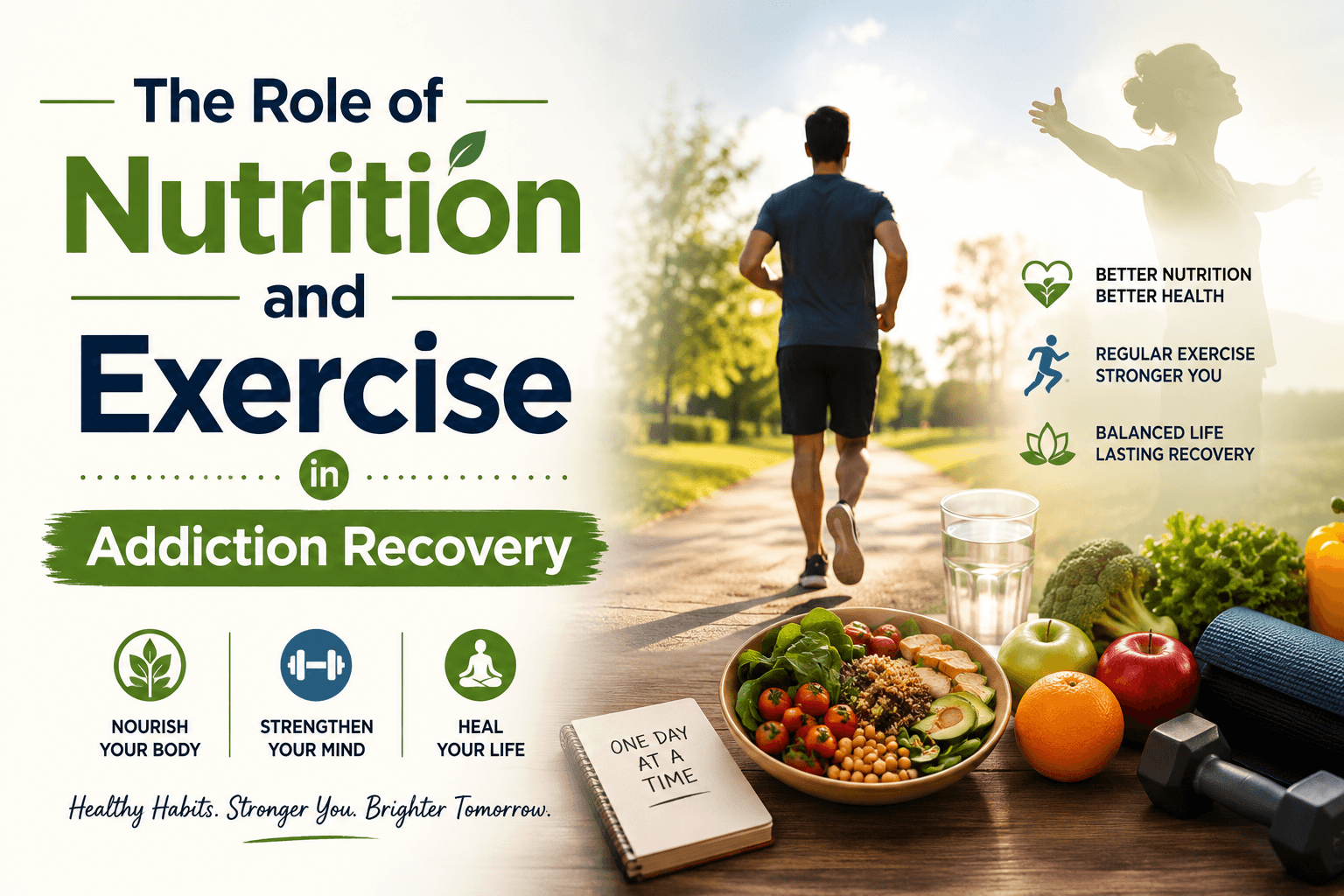
Addiction recovery is not only about stopping drugs or alcohol. It is about helping the whole person heal. The brain needs support. The body needs repair. Energy must return. Sleep needs to improve. And daily life needs a healthier rhythm. Here is the simple truth: recovery becomes harder when the body is running on empty. Long periods of substance use can disturb eating habits, sleep, digestion, mood, and physical strength. During recovery, good nutrition and regular exercise can become powerful parts of a wider treatment plan. They do not replace counselling, medical care, or professional addiction treatment. But when used correctly, they can support healing, build routine, and help people feel stronger day by day.
Why Nutrition Matters During Addiction Recovery
Substance use can affect the way a person eats and how the body uses nutrients. Some people skip meals, depend on processed food, or lose interest in eating. Others may develop irregular eating patterns. As a result, the body may not receive the protein, vitamins, minerals, healthy fats, and energy it needs. Balanced meals can help support physical strength and provide steady energy throughout the day. Regular eating times can also create structure, which is important when someone is trying to replace an unstable lifestyle with healthier routines. Early recovery can involve tiredness, mood changes, poor concentration, and disturbed sleep. These experiences may have many causes and should always be discussed with qualified professionals when they are severe or persistent. Healthy eating can still play a supportive role. Meals containing protein, whole grains, fruits, vegetables, and healthy fats provide nutrients the body needs for normal functioning. Drinking enough water is equally important, especially when poor hydration has been part of a person’s previous routine.
The Role of Exercise in Recovery
Exercise is more than building muscles or losing weight. In addiction recovery, movement can become a healthy way to manage time, release tension, improve fitness, and reconnect with the body. Walking, stretching, yoga, cycling, swimming, and supervised strength exercises are possible options depending on a person’s health and ability. A recovering person does not need to become an athlete. Even small amounts of suitable activity can be a meaningful beginning. The World Health Organization reports that 31% of adults worldwide, around 1.8 billion people, did not meet recommended physical activity levels in 2022. WHO also states that regular physical activity can improve mental health, sleep, and overall well-being. For most adults, WHO recommends at least 150 minutes of moderate-intensity physical activity per week.
Important Recovery Habits at a Glance
| Area | How It Can Support Recovery | Simple Examples |
| Nutrition | Supports energy and general physical health | Balanced meals, fruits, vegetables, protein |
| Hydration | Supports normal body function | Water and suitable healthy fluids |
| Exercise | Supports fitness, mood, sleep, and routine | Walking, yoga, stretching, cycling |
| Sleep | Gives the body and mind time to recover | Regular bedtime and wake-up time |
| Routine | Reduces unstructured time and builds stability | Planned meals, therapy, exercise, rest |
Exercise Can Create a Healthy Daily Routine
Addiction often brings chaos into everyday life. Sleep may happen at unusual hours. Meals may be skipped. Responsibilities can be ignored. Recovery requires rebuilding a life that feels organised and meaningful. A morning walk, an evening yoga session, or a scheduled fitness activity gives the day structure. Completing a small physical goal can also create a sense of progress. Over time, healthy routines can replace some of the time and patterns previously connected with substance use.
Can Exercise Help With Stress and Cravings?
Stress is a common challenge during recovery, and cravings can appear unexpectedly. Physical activity may provide a healthier response to difficult moments by shifting attention, reducing tension, and giving the person something constructive to do. For example, instead of sitting alone with rising stress, someone may take a supervised walk, practise breathing exercises, stretch, or join a group activity. These actions are not substitutes for relapse-prevention strategies, counselling, or medical support. They are additional tools.
Why Balance Matters More Than Perfection
Recovery is not about following a perfect diet or exercising every single day. Putting too much pressure on yourself to be perfect can create stress and disappointment. What matters more is building healthy habits that are realistic and easy to continue. Eating balanced meals most of the time, staying hydrated, getting enough sleep, and doing regular physical activity can gradually support physical and emotional well-being. Some days will be better than others, and that is a normal part of building a new routine. A missed workout or an unhealthy meal does not erase progress. The goal is consistency, not perfection. Small choices repeated over time can create meaningful changes. During addiction recovery, learning to maintain balance can also help people develop a healthier relationship with food, exercise, rest, and everyday responsibilities.
How Rehab Can Build Healthier Habits
Addiction can disrupt almost every part of a person’s daily routine. Regular meals may be replaced by irregular eating, sleep schedules can become disturbed, physical activity may decrease, and basic self-care can become less important. A structured rehabilitation program helps individuals slowly rebuild these areas in a safe and supportive environment.
In rehab, the day often follows an organised routine that may include fixed meal times, counselling sessions, group activities, suitable exercise, relaxation, and regular sleeping hours. Following this structure every day can help healthy actions gradually become familiar habits.
Rehabilitation can also help people understand why healthy routines matter. Counsellors and other professionals can support individuals in identifying unhealthy patterns and developing practical ways to manage stress, cravings, and difficult emotions. Over time, these new habits can become valuable tools for life after treatment.
The aim is not simply to follow a routine while staying at a rehab centre. It is to develop practical habits that can continue after returning home. When people learn to plan their days, take care of their physical health, manage stress in healthier ways, and maintain a stable routine, they may be better prepared to face the challenges of long-term recovery.
Conclusion
Addiction recovery is a journey of rebuilding. Nutrition helps fuel the body. Exercise encourages movement, routine, and well-being. Neither is a stand-alone cure, but both can strengthen a complete recovery plan when combined with professional treatment, counselling, medical support, and relapse-prevention strategies. At We Can Rehab, the best rehab centre in Kolkata, the focus is on helping individuals move toward a healthier and more structured life through professional addiction recovery support. Recovery is not built through one dramatic change. It is built through many healthier choices, repeated consistently, with the right guidance and support.
FAQs
1. What types of addiction does a rehab centre treat?
Rehabilitation centres may support people experiencing problems related to alcohol, drugs, and other substance use. The appropriate program depends on the person’s needs, health, and addiction history.
2. How long does someone need to stay in rehab?
There is no single duration that suits everyone. The recommended length of treatment can depend on addiction severity, physical health, mental well-being, progress, and the treatment plan created by professionals.
3. Can family members stay involved during rehabilitation?
Family involvement may be encouraged when it supports recovery and fits the treatment program. Families should ask We Can Rehab about its current visitation, communication, and family-support policies.
4. Is information about a patient kept confidential?
Privacy is an important concern for people seeking addiction treatment. Patients and families should directly discuss confidentiality procedures, records, and communication policies with the rehabilitation centre before admission.
5. What should families ask before choosing We Can Rehab?
Ask about assessment, treatment methods, staff qualifications, medical support, daily routines, family involvement, relapse-prevention planning, costs, and aftercare. Clear answers can help families understand whether the program matches the individual’s needs.