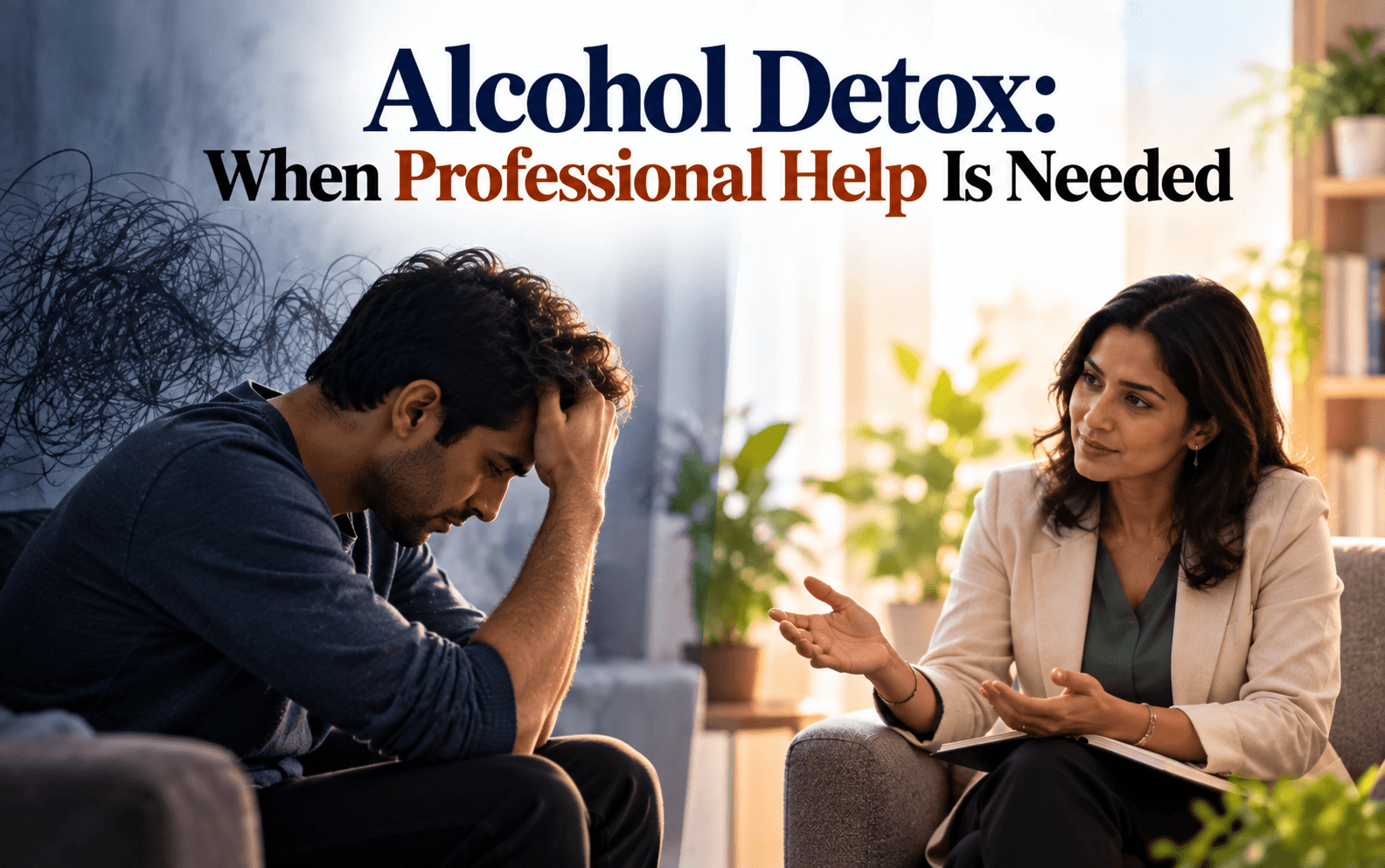
You know something needs to change, but you are not sure where to begin. Maybe alcohol has slowly become part of every evening. Maybe you wake up anxious, reach for a drink to feel normal, or worry about what happens when you finally stop. If this sounds familiar, alcohol detox can be an important first step toward getting your life back on track. But detox is not simply about stopping alcohol. For someone who drinks heavily or regularly, stopping suddenly can trigger withdrawal symptoms that range from uncomfortable to dangerous. Knowing when to seek professional help can make the journey safer, calmer, and more manageable.
What Is Alcohol Detox?
It is the first stage of stopping alcohol use. During this stage, the body clears alcohol while the person deals with possible withdrawal symptoms. These symptoms can include anxiety, sweating, shaking, nausea, trouble sleeping, headaches, and a fast heartbeat. Some people develop severe symptoms, including confusion, seizures, or hallucinations. Because withdrawal can become dangerous, people with heavy or long-term alcohol use should seek professional advice before they stop suddenly.
Detox Is Only the First Step
Getting through withdrawal is an important achievement, but it does not automatically end addiction. Alcohol dependence can involve habits, emotional triggers, stress, family problems, mental health concerns, and social situations. After detox, a person may need counselling, behavioural therapy, family support, group sessions, healthy routines, and continued follow-up. A personalized recovery plan can help the person understand triggers and build healthier ways to handle difficult moments.
Why Can Alcohol Withdrawal Become Dangerous?
Alcohol changes the way the brain and nervous system work. With repeated drinking, the body adapts to alcohol’s effects. When alcohol suddenly disappears, the nervous system can become overactive. That reaction can cause uncomfortable symptoms and, in severe cases, medical emergencies. You should take alcohol withdrawal very seriously if a person has a history of heavy drinking, previous severe withdrawal, seizures, serious health problems, or strong withdrawal symptoms after missing alcohol. A doctor can assess the person’s condition and decide what level of care they need.
When Should You Consider Professional Detox?
Professional care can make the process safer and easier to manage. Consider professional detox when drinking has become regular, the person cannot control how much they drink, or withdrawal symptoms appear after a few hours without alcohol. You should also seek help when alcohol affects work, relationships, sleep, finances, or daily responsibilities. If someone drinks in the morning to feel normal, hides alcohol use, or repeatedly promises to stop but cannot, these signs deserve attention.
What Happens During Alcohol Detox?
A professional detox process usually starts with an assessment. During alcohol detox, the care team asks about drinking patterns, previous withdrawal, current symptoms, medicines, and other health concerns. This information helps the team create an appropriate plan. During alcohol detox, a qualified team can monitor withdrawal symptoms and respond if they become more serious. The person may receive supportive care and, when clinically appropriate, prescribed medicines to reduce certain withdrawal risks. The exact approach depends on the person’s health, drinking history, and symptoms. Detox should focus on safety rather than speed. Trying to finish the process as quickly as possible can create unnecessary risks. A professional team can also help the person understand what comes next, because detox alone does not address the reasons behind addiction.
Signs That Need Urgent Medical Attention
- Severe confusion or disorientation
- Hallucinations
- Seizures
- Extreme agitation or restlessness
- Fainting or loss of consciousness
- Chest pain
- Difficulty breathing
- Major changes in consciousness or responsiveness
- Any rapidly worsening or severe withdrawal symptoms
If any of these symptoms occur, seek emergency medical care immediately. Do not try to manage severe withdrawal alone or give alcohol as a home treatment unless specifically instructed by a medical professional.
Why Home Detox May Not Be the Best Choice
Many people want to detox at home because they feel embarrassed, fear judgment, or worry about treatment costs. The problem is that you cannot predict the severity of withdrawal from drinking habits alone. Alcohol detox can provide access to professional assessment, monitoring, counselling, and a structured recovery environment. It can also give families guidance when they feel unsure about what to do.
What Makes Professional Detox Different?
A professional space provides structure at a time when the body and mind may feel unstable. During alcohol detox, the person does not have to face every symptom alone. The care team can observe changes, provide appropriate support, and guide the next stage of treatment. WE CAN Youth Welfare Organisation states that its Sonarpur centre uses a holistic approach with support from general physicians, counsellors, psychiatrists, and psychologists. It also provides follow-up support after treatment to help people return to society and work. These services form part of its broader rehabilitation approach.
A Simple Comparison: Home Detox vs Professional Support
| Factor | Home Detox | Professional Support |
| Withdrawal monitoring | Limited | Regular professional monitoring |
| Emergency response | May be delayed | Faster access to trained support |
| Treatment structure | Often inconsistent | Planned and structured |
| Family guidance | May be limited | Can include counselling and guidance |
| Recovery planning | Often starts later | Can begin during treatment |
Who Should Consider Alcohol Detox?
Anyone who feels unable to stop drinking safely should consider speaking with a qualified healthcare professional. You do not need to wait until alcohol causes a major health problem. Early support for alcohol detox can help a person understand the level of dependence and choose a suitable treatment path. Families can also seek guidance about it. If you are worried about a parent, partner, sibling, friend, or adult child, a professional conversation can help you approach the situation with care instead of blame.
How We Can Rehab Can Help
We Can Rehab operates in Khurigachi, Sonarpur, Kolkata, and focuses on alcohol and drug addiction rehabilitation. The organisation says it provides detoxification, counselling, psychological rehabilitation, medical assistance, and ongoing support. Its approach combines physical, psychological, and social aspects of recovery. The goal should never be simply to stop drinking for a few days. The bigger goal should involve helping the person move toward stable, long-term recovery. We Can Rehab’s approach includes counselling and rehabilitation after the initial detox stage, which can help people work on the deeper causes and patterns connected with addiction. If you or someone close to you struggles with alcohol dependence, take the first step by speaking with a qualified professional. Do not let shame or fear delay necessary help. Recovery can begin with one honest conversation.
Conclusion
Alcohol dependence can affect health, relationships, work, and everyday life. When withdrawal creates risks, professional support can provide a safer path forward. Alcohol detox can be an important first step for someone who needs structured help, but lasting recovery requires more than detox. Look for an alcohol detox centre in Kolkata to get the professional guidance, medical support, and structured care needed during this stage. Continued treatment, emotional support, and a personalised recovery plan are also important for building a healthier life beyond detox.
FAQs
1. Where is We Can Rehab located?
We Can Rehab operates at Khurigachi, Sonarpur, Kolkata – 700150. The organisation lists Sonarpur, Kolkata as its location and provides contact details on its website.
2. Does We Can Rehab provide alcohol detox?
Yes. We Can Rehab describes detoxification as part of its addiction treatment and rehabilitation services. Its website also presents the organisation as a centre for people dealing with alcohol and drug addiction.
3. What happens after detox at We Can Rehab?
Detox forms only one part of the recovery process. We Can Rehab describes counselling, psychological rehabilitation, therapy, medical assistance, community support, and follow-up support as parts of its broader approach.
4. Can families contact We Can Rehab for guidance?
Yes. Families can contact the centre when they need support for a loved one facing addiction. Family involvement can also help create a more supportive recovery environment.
5. How can I contact We Can Rehab in Sonarpur?
We Can Rehab lists 9051513595 and 6291286297 as contact numbers and gives its address as Khurigachi, Sonarpur, Kolkata – 700150.