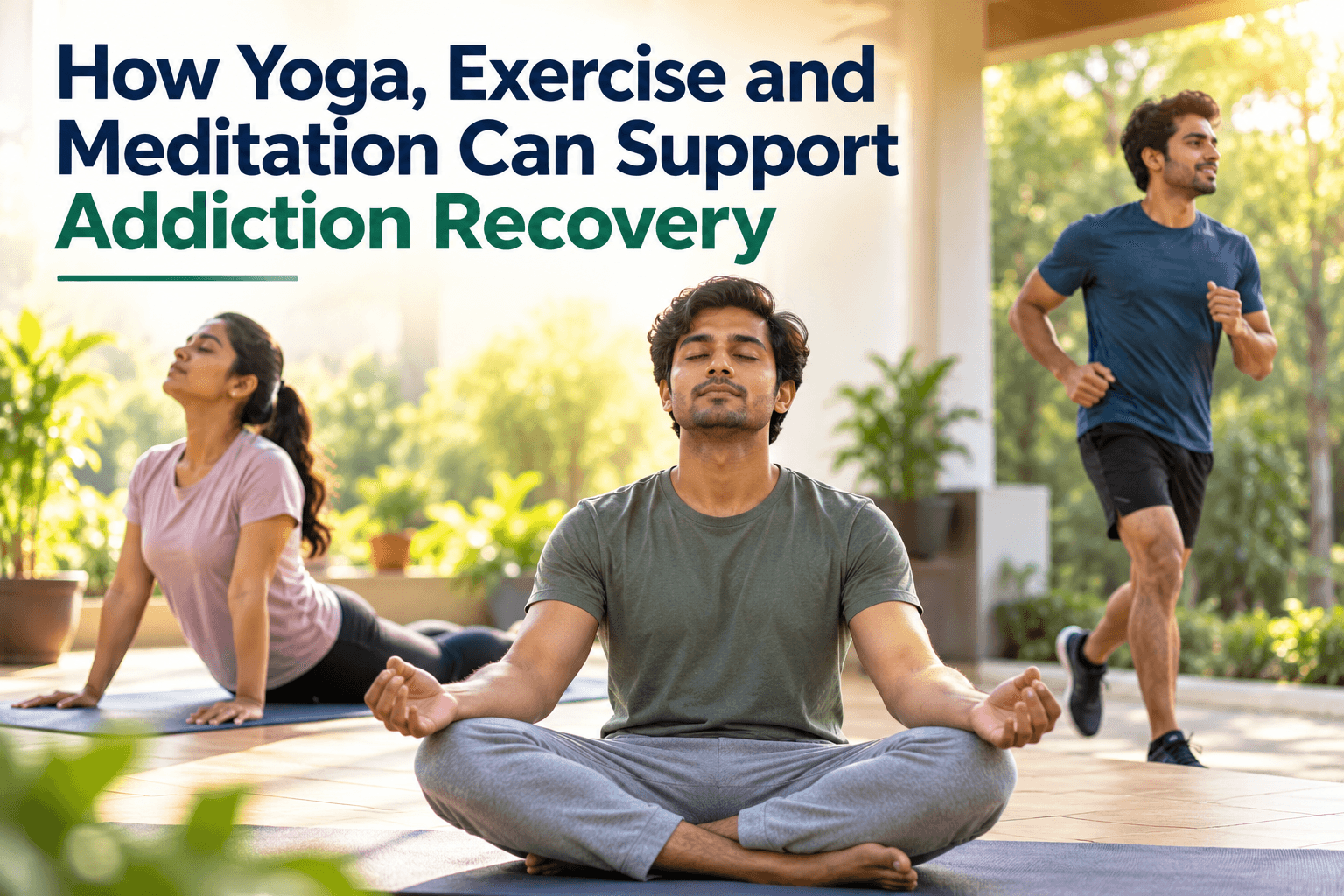
Recovering from drug or alcohol addiction is not just about stopping substance use. It is also about learning how to live a healthier, more balanced life. During recovery, a person may experience stress, anxiety, mood changes, cravings and difficulty managing everyday responsibilities. Even simple activities can sometimes feel challenging. This is where healthy habits such as yoga, exercise and meditation can make a positive difference. Imagine starting your morning with a short walk, practising a few yoga poses or spending ten minutes focusing on your breathing. These small activities may help you feel more relaxed, improve your physical health and develop a better daily routine. Although they cannot replace medical treatment or counselling, they can become valuable parts of a well-planned addiction recovery programme.
Why Is a Healthy Lifestyle Important During Addiction Recovery?
Addiction can affect both physical and psychological health. Long-term substance use may disturb sleeping patterns, appetite, emotional balance, concentration and everyday routines. Some individuals also experience anxiety, low motivation and difficulty managing stress after stopping substance use. Recovery involves gradually rebuilding these areas of life. Along with appropriate medical care and counselling, healthy lifestyle habits can help individuals develop structure and confidence. Yoga, exercise and meditation offer different ways to support this process. Physical activity encourages movement and improves general fitness, yoga combines movement with breathing and awareness, while meditation helps individuals observe their thoughts and emotions. Physical activity can support mental health and overall well-being during recovery. The National Center for Complementary and Integrative Health (NCCIH) also discusses mindfulness-based approaches and yoga as complementary practices that may support people receiving treatment for substance use disorders. These activities should be introduced according to an individual’s health, physical ability and treatment plan.
How Yoga Can Support Addiction Recovery
Manages Stress and Anxiety: Yoga combines gentle movements and breathing exercises that may help individuals feel calmer and more relaxed.
Improves Body Awareness: It encourages individuals to recognise physical discomfort, tiredness and other bodily needs.
Supports Emotional Balance: Regular practice may help individuals understand their emotions and respond to difficult situations more calmly.
Builds a Healthy Routine: Practising yoga regularly encourages discipline and supports positive habits, such as eating on time and maintaining a healthy sleep schedule.
Complements Addiction Treatment: Yoga can support recovery alongside professional medical care and counselling, but should never replace them.
How Exercise Supports Addiction Recovery
Improves Physical Fitness: Suitable exercises such as walking, cycling, stretching and light strength training may gradually improve stamina, muscle strength, flexibility and overall fitness.
Helps Manage Stress and Improve Mood: Regular physical activity may help reduce stress, improve mood and provide a healthy way to manage boredom, restlessness and emotional discomfort.
Creates a Positive Daily Routine: Including exercise in a daily schedule encourages discipline, keeps individuals engaged in constructive activities and builds a sense of achievement.
May Support Better Sleep: Moderate physical activity during the day may promote relaxation and support healthier sleep patterns. Persistent sleep problems should be discussed with a healthcare professional.
Encourages Gradual Progress: Individuals should start with simple activities and increase intensity according to their physical condition and professional guidance.
How Meditation Can Help During Addiction Recovery
Develops Better Control Over Thoughts and Reactions: Mindfulness meditation encourages individuals to observe cravings, thoughts and emotions without immediately reacting to them. This may help create a pause before making impulsive decisions.
Helps Improve Concentration: Focusing on breathing or a particular sound during meditation may gradually improve attention and concentration in everyday activities.
Encourages Emotional Awareness: Meditation helps individuals recognise feelings such as anger, anxiety, loneliness and sadness, making it easier to understand and communicate their emotions.
Supports Relaxation: Guided meditation and slow breathing may help individuals feel calmer and manage everyday stress.
Can Be Practised with Guidance: Meditation can be included in daily routines or recovery programmes with support from a trained instructor. Individuals who find meditation uncomfortable should discuss suitable alternatives with a healthcare professional.
Yoga vs Exercise vs Meditation: Which Is More Helpful?
Yoga, exercise and meditation support different aspects of well-being. Instead of choosing only one, individuals may benefit from combining suitable activities as part of their recovery plan.
| Activity | Main Focus | Possible Benefits During Recovery |
|---|---|---|
| Yoga | Movement, breathing and awareness | May support relaxation, flexibility and stress management. |
| Exercise | Physical movement and fitness | Supports physical health, stamina, mood and daily routine. |
| Meditation | Mindfulness and attention | May help with emotional awareness, stress and managing cravings. |
| Walking | Light physical activity | Encourages movement and provides a simple daily routine. |
| Breathing exercises | Controlled breathing | May encourage relaxation and awareness of emotional responses. |
There is no single activity that works equally well for everyone. The most suitable approach depends on physical health, personal preferences, treatment needs and professional guidance.
Simple Yoga, Exercise and Meditation Activities to Start With
Individuals do not need to begin with a demanding fitness programme. Small and manageable activities can help them gradually develop confidence. Some suitable starting options include:
- Morning walking: Begin with a comfortable 10 to 15-minute walk, if medically appropriate. Gradually increase the duration according to energy levels and physical ability.
- Gentle stretching: Simple neck, shoulder, arm and leg stretches may help reduce stiffness and improve flexibility.
- Basic yoga poses: Under suitable guidance, individuals may practise simple poses such as Tadasana, Balasana and gentle seated stretches. Poses should be modified according to physical limitations.
- Deep breathing: Sit comfortably and breathe gently, paying attention to the natural movement of the breath. Avoid forcing deep breaths or holding the breath if it causes discomfort.
- Guided meditation: Start with five minutes of guided mindfulness or breathing meditation. Gradually increase the duration if it feels comfortable.
- Group activities: Participating in suitable group exercise or yoga sessions may provide opportunities for positive social interaction and encouragement.
The objective is to develop sustainable habits rather than achieve a particular fitness target.
How to Create a Daily Wellness Routine During Recovery
Following a simple daily schedule can make it easier to include healthy activities without feeling overwhelmed. Here is an example of a basic routine that may be adapted according to an individual’s treatment plan.
| Time | Suggested Activity | Purpose |
|---|---|---|
| Morning | Gentle stretching and walking | Start the day with movement. |
| Breakfast | Balanced breakfast and hydration | Support general physical health. |
| Late morning | Counselling or scheduled treatment | Address addiction-related concerns. |
| Afternoon | Rest and suitable recreational activities | Maintain a balanced routine. |
| Evening | Light exercise or guided yoga | Encourage movement and relaxation. |
| Before bedtime | Short meditation or breathing practice | Prepare for a calm bedtime routine. |
This is only an illustrative routine. A person’s schedule should be developed according to their medical needs, rehabilitation programme and energy levels.
Important Precautions Before Starting Yoga or Exercise
Although these activities can support general well-being, they are not suitable for every person at every stage of recovery. Someone experiencing severe withdrawal symptoms, dehydration, significant weakness or an existing medical condition may need medical assessment before beginning physical activities. Keep the following precautions in mind:
- Consult a healthcare professional before starting a new exercise or yoga programme.
- Begin with gentle activities instead of intense workouts.
- Avoid exercising when experiencing dizziness, chest pain, severe weakness or breathing difficulties.
- Practise yoga under the guidance of an appropriately trained instructor.
- Stay hydrated and allow sufficient time for rest.
- Do not use exercise as a punishment for past substance use.
- Never replace prescribed medicines, detoxification or counselling with yoga or meditation.
Withdrawal from alcohol and certain medicines can be medically dangerous. Medical supervision is essential when withdrawal may cause serious complications.
Can Yoga, Exercise and Meditation Prevent Relapse?
Yoga, exercise and meditation may help individuals develop healthier ways of managing stress, boredom and emotional discomfort. These activities can also create positive routines and provide alternatives to spending time around situations associated with substance use. Mindfulness-based practices may help some people recognise cravings and understand the thoughts or emotions that accompany them. Physical activity can support mental and physical well-being. However, these practices cannot guarantee relapse prevention. Addiction is a complex condition, and recovery usually requires a combination of appropriate medical care, counselling, behavioural therapies, social support and continued follow-up. The National Center for Complementary and Integrative Health notes that research on yoga for substance use disorders is promising but still limited. Therefore, yoga and meditation should be considered complementary approaches rather than standalone addiction treatments.
How WE CAN Rehab Supports Addiction Recovery
Building a healthy lifestyle is an important part of long-term recovery, but individuals facing addiction may also need structured medical and psychological support. Its website describes services including detoxification, counselling, psychological rehabilitation, medical assistance and follow-up support, with access to general physicians, psychologists, counsellors and psychiatrists. Individuals and families searching for the best Nasha Mukti Kendra in Kolkata can contact WE CAN Rehab to learn about its location, treatment arrangements and available support. Before choosing a rehabilitation centre, families should enquire about medical supervision, personalised treatment, safety arrangements and follow-up care. Yoga, exercise and meditation may complement professional addiction treatment when appropriate, but should never replace it.
Conclusion
Yoga, exercise and meditation can become valuable parts of an individual’s addiction recovery journey. Yoga may encourage relaxation and body awareness, exercise can support physical fitness and emotional well-being, while meditation may help individuals understand their thoughts and manage difficult emotions. These activities also provide opportunities to develop healthier routines and positive habits. However, they should always be combined with appropriate medical care, counselling and professional rehabilitation support. Recovery takes time, and every small step towards a healthier lifestyle matters. With consistent effort and the right guidance, individuals can gradually rebuild their confidence, well-being and quality of life.
FAQs
1. Can yoga help someone recover from drug addiction?
Yoga may support addiction recovery by encouraging relaxation, body awareness and stress management. Some research has shown promising results, but yoga should be used as a complementary practice alongside medical treatment, counselling and professional rehabilitation.
2. How does exercise help during addiction recovery?
Exercise can support physical fitness, improve general well-being and encourage a structured daily routine. Walking, stretching and other suitable activities may also help individuals manage stress and improve their mood. The exercise plan should be adjusted according to medical advice.
3. Can meditation reduce drug cravings?
Mindfulness meditation may help individuals recognise cravings, understand emotional triggers and develop healthier responses to difficult thoughts. However, it cannot guarantee that cravings will disappear. It works best as part of a broader recovery programme.
4. Does WE CAN Rehab provide addiction rehabilitation services?
WE CAN Youth Welfare Organisation describes its services as including detoxification, counselling and psychological rehabilitation. Its website also mentions access to general physicians, psychologists, counsellors and psychiatrists, along with medical assistance and follow-up support.
5. Where is WE CAN Rehab located in Kolkata?
WE CAN Rehab is located at Khurigachi, Sonarpur, Kolkata – 700150. You can contact the organisation at 9051513595 or 6291286297 to enquire about its addiction rehabilitation services.