
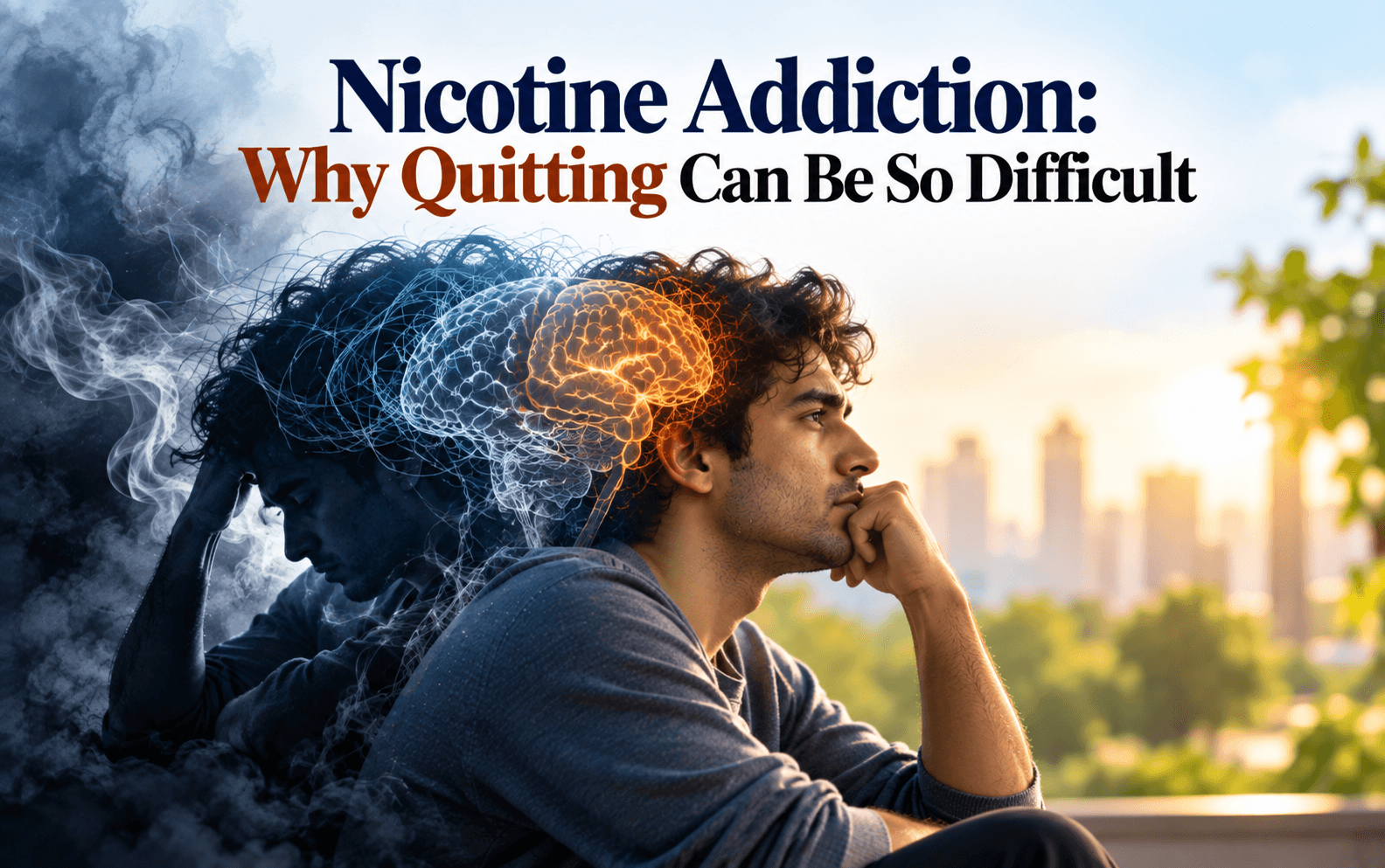
You decide to quit. You throw away the cigarettes, promise yourself that today will be different, and then a few hours later, the craving hits. You feel restless, irritated, distracted, or anxious, and suddenly that one cigarette seems impossible to resist. This is not simply about willpower. Nicotine Addiction can change how the brain responds to nicotine, making quitting difficult even when someone genuinely wants to stop. Understanding why this happens, what triggers cravings, and what treatment options are available can make quitting more manageable.
What Is Nicotine Addiction?
Nicotine Addiction is a condition in which the body and brain become dependent on nicotine, a highly addictive substance found in cigarettes, tobacco products, and some vaping products. Nicotine reaches the brain quickly and can temporarily create feelings of pleasure, relaxation, or alertness. With repeated use, the brain adapts to nicotine. Over time, a person may need nicotine regularly to feel normal and may experience cravings or discomfort when they try to stop. This can make quitting feel much harder than simply deciding not to smoke.
Why Is Nicotine Addiction So Difficult to Break?
Nicotine affects the brain’s reward system. It increases the release of chemicals such as dopamine, which are linked with pleasure and reward. Repeated exposure can reinforce the habit and create strong associations between nicotine and everyday activities. For example, someone may automatically want a cigarette after eating, while drinking tea or coffee, during work breaks, or when feeling stressed. These routines can become powerful triggers even when the physical effects of nicotine begin to decrease.
What Causes Nicotine Addiction?
Several factors can contribute to Nicotine Addiction, and the reasons can differ from person to person.
- Repeated nicotine use: Regular exposure can lead to physical dependence.
- Brain changes: Nicotine can affect the brain’s reward and pleasure pathways.
- Stress and emotions: Some people use nicotine to cope with stress, anxiety, boredom, or difficult emotions.
- Daily routines: Smoking can become connected with meals, breaks, social situations, or specific places.
- Social influence: Friends, family members, colleagues, or social environments may encourage tobacco use.
- Early exposure: Starting tobacco use at a young age can make dependence more difficult to overcome.
- Easy access: Frequent access to cigarettes or other nicotine products can reinforce regular use.
Common Symptoms of Nicotine Addiction
The symptoms of Nicotine Addiction can involve both physical and behavioural changes. A person may continue using nicotine even when they know it is affecting their health or daily life. Common signs include:
- Strong or frequent cravings for nicotine
- Difficulty cutting down or stopping
- Feeling restless or irritable without nicotine
- Using nicotine soon after waking up
- Increasing the amount or frequency of tobacco use
- Difficulty concentrating when trying to quit
- Feeling anxious or frustrated without nicotine
- Returning to tobacco use after previous attempts to quit
- Continuing to use nicotine despite health, financial, or relationship concerns
What Is Nicotine Withdrawal?
Nicotine withdrawal occurs when a person who regularly uses nicotine suddenly reduces or stops their intake. The symptoms can begin within hours and may become more noticeable during the first few days. Common symptoms may include:
- Irritability or mood changes
- Anxiety or restlessness
- Strong cravings
- Headaches
- Difficulty concentrating
- Trouble sleeping
- Increased appetite
- Low mood or frustration
Withdrawal symptoms usually become easier to manage with time, although cravings can sometimes return later when a person encounters a familiar trigger.
Nicotine Dependence vs Nicotine Addiction
The terms dependence and addiction are often used together, but they can describe slightly different aspects of nicotine use. Tobacco dependence refers to the body’s physical or psychological need for tobacco or nicotine. Addiction also involves compulsive use and difficulty controlling the behaviour despite negative consequences. Understanding this difference can help people recognise that repeated tobacco use is not simply a bad habit. It can involve changes in both the brain and behaviour.
How Is Nicotine Addiction Treated?
Treatment for Nicotine Addiction can involve a combination of behavioural support, counselling, medication, and practical strategies to manage cravings. A healthcare professional may recommend:
- Counselling: Helps identify triggers, habits, and situations that lead to nicotine use.
- Behavioural therapy: Can help a person develop healthier responses to cravings and stressful situations.
- Nicotine replacement therapy: Products such as patches, gum, or lozenges may help reduce withdrawal symptoms and cravings.
- Prescription medicines: Certain medicines may be recommended by a healthcare professional to support smoking cessation.
- Support groups: Sharing experiences with others can provide motivation and accountability.
- Lifestyle changes: Exercise, healthy routines, adequate sleep, and avoiding known triggers can support the quitting process.
The right treatment depends on the person’s nicotine use, health history, previous attempts to quit, and individual needs.
When Should You Seek Professional Help?
You do not have to wait until quitting attempts repeatedly fail before seeking support. Professional help may be useful if cravings feel difficult to control, withdrawal symptoms interfere with daily activities, or you repeatedly return to nicotine despite wanting to stop. A nicotine addiction treatment centre may provide structured support, counselling, medical guidance, and a personalised plan for quitting. Professional care can also be particularly helpful when nicotine use is connected with stress, emotional difficulties, or long-established routines.
A Simple Comparison: Quitting Alone vs Professional Support
| Factor | Quitting Alone | Professional Support |
| Understanding triggers | Self-identified | Guided assessment |
| Withdrawal management | Self-managed | Professional guidance |
| Craving control | Personal strategies | Structured strategies and treatment options |
| Behavioural support | May be limited | Counselling may be available |
| Relapse prevention | Often self-planned | Can include a structured plan |
| Follow-up | Depends on the individual | May include ongoing support |
How Can You Make Quitting Easier?
Quitting becomes more manageable when you prepare for cravings instead of being surprised by them. Identify situations that make you want nicotine and plan alternatives in advance. You can try:
- Removing cigarettes and tobacco products from your surroundings
- Avoiding situations that strongly trigger cravings during the early stages
- Keeping yourself occupied during usual smoking times
- Drinking water or using another healthy distraction when cravings appear
- Informing supportive friends or family members about your decision
- Following a treatment plan recommended by a healthcare professional
- Treating a relapse as a signal to review your strategy rather than giving up completely
Who Should Consider Nicotine Addiction Support?
Anyone who wants to stop using nicotine but finds it difficult to do so can consider professional support. Nicotine dependance can affect people differently, and some may need more structured assistance than others. If you have tried to quit several times, experience strong withdrawal symptoms, or find that nicotine controls your daily routine, speaking with a qualified professional can help you understand your options.
The Goal Is Long-Term Recovery
Overcoming Nicotine Addiction is not always an overnight process. Cravings may come and go, and certain situations may trigger the desire to smoke even after a person has stopped for some time. The goal is to gradually break the connection between nicotine and everyday routines while developing healthier ways to manage stress, emotions, and cravings. With the right support and a realistic plan, quitting can become more achievable.
Conclusion
Quitting nicotine can be difficult because the habit involves more than physical dependence. Brain changes, cravings, daily routines, emotional triggers, and social situations can all make stopping challenging. Nicotine Addiction can be treated, and professional support can make the process easier to understand and manage. If you or someone close to you is struggling to quit, seeking professional guidance can be an important first step. You do not have to handle every craving or withdrawal symptom alone. With appropriate treatment, support, and patience, a nicotine-free life is possible.
FAQs
1. Why is Nicotine Addiction difficult to quit?
Nicotine affects the brain’s reward system and can create both physical dependence and strong behavioural habits. Cravings can also become connected with everyday activities, stress, and social situations.
2. What are the common symptoms when quitting nicotine?
Common symptoms include cravings, irritability, anxiety, restlessness, headaches, difficulty concentrating, sleep problems, increased appetite, and mood changes.
3. How long does nicotine withdrawal last?
Withdrawal varies from person to person. Symptoms can begin within hours of stopping and are often strongest during the first few days. They generally become easier to manage over time, although occasional cravings may return.
4. Can nicotine addiction be treated?
Yes. Treatment can include counselling, behavioural support, nicotine replacement therapy, prescription medicines when appropriate, support groups, and lifestyle changes.
5. Should I seek professional help to quit smoking?
Professional help can be useful if you have strong cravings, repeated unsuccessful quit attempts, significant withdrawal symptoms, or difficulty controlling nicotine use. A qualified healthcare professional can help you choose an appropriate approach.