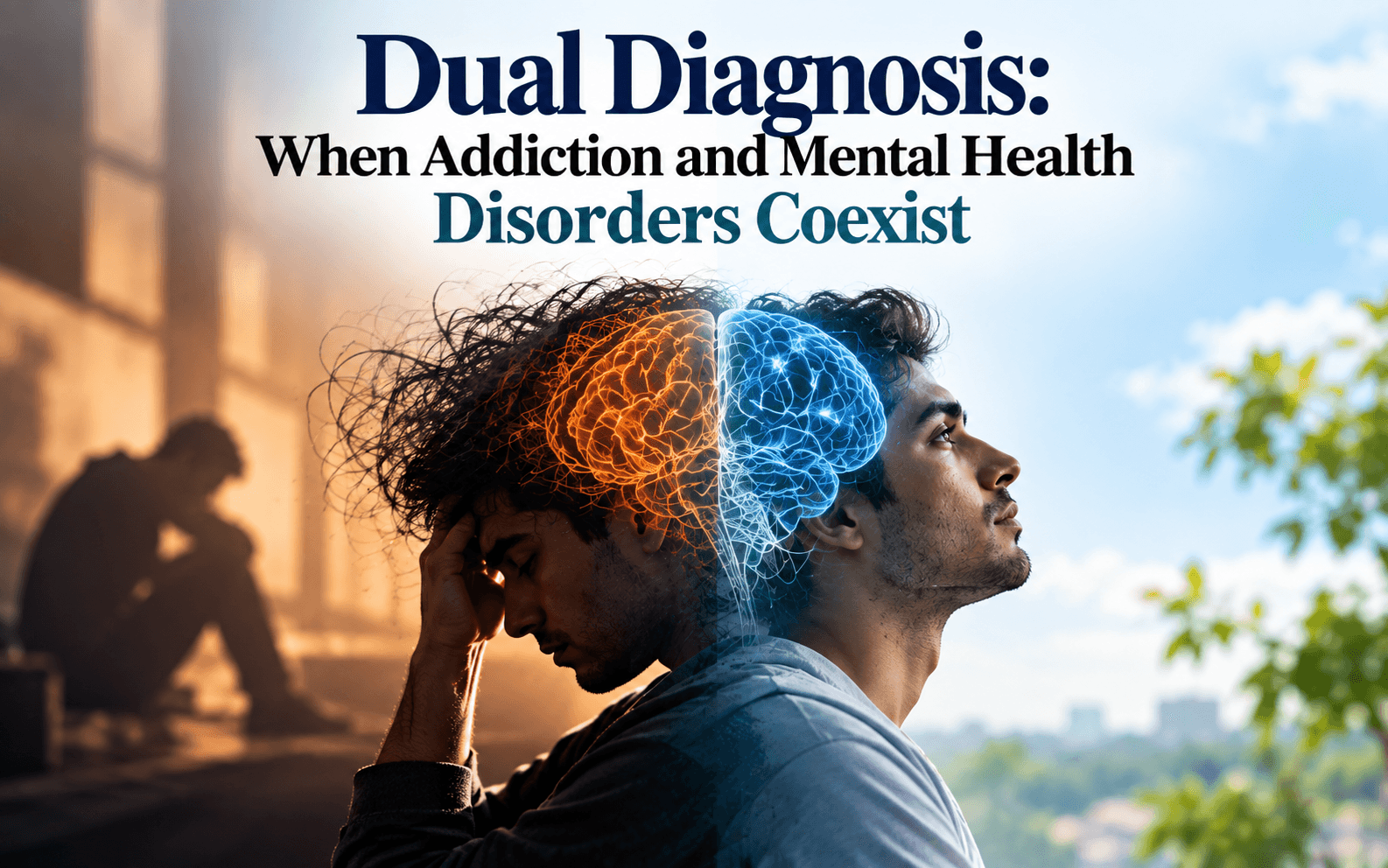
Sometimes, addiction is only part of the story. A person may be struggling with alcohol or drugs while also dealing with anxiety, depression, trauma, or another mental health condition. They may use substances to cope with difficult emotions, while substance use itself makes those emotions worse. This connection can make recovery more complicated than simply stopping alcohol or drugs. A dual diagnosis refers to the presence of both a substance use disorder and a mental health disorder in the same person. Understanding this connection can help families recognise the signs and seek the right kind of support.
What Is a Dual Diagnosis?
A dual diagnosis occurs when someone has both a substance use disorder and a mental health condition. The two conditions can influence each other and may sometimes make one another more difficult to manage. For example, a person experiencing depression may use alcohol to temporarily escape feelings of sadness or hopelessness. Over time, regular alcohol use may worsen their mood and create additional problems. Similarly, someone with anxiety may rely on drugs or alcohol to feel calmer but eventually become dependent on the substance. Dual diagnosis does not mean that one condition always causes the other. Both may develop for different reasons, or one may contribute to the development or worsening of the other.
Which Mental Health Disorders Can Occur With Addiction?
Several mental health conditions can occur alongside substance use disorders. Some commonly associated conditions include:
- Depression
- Anxiety disorders
- Post-traumatic stress disorder (PTSD)
- Bipolar disorder
- Attention-deficit/hyperactivity disorder (ADHD)
- Personality disorders
- Trauma-related conditions
- Certain psychotic disorders
The symptoms and treatment needs can vary significantly from person to person. A professional assessment is important to understand what someone is experiencing.
Why Can Addiction and Mental Health Problems Occur Together?
There is no single explanation for why addiction and mental health disorders occur together. Several factors can contribute to both conditions.
a. Shared Risk Factors
Some people may have genetic, biological, or environmental factors that increase their vulnerability to both substance use and mental health problems.
b. Substance Use as a Coping Mechanism
A person experiencing emotional distress may start using alcohol or drugs to escape difficult thoughts or feelings. What begins as occasional use can gradually become a pattern.
c. Addiction Affecting Mental Health
Regular substance use can affect sleep, mood, relationships, decision-making, and overall wellbeing. In some cases, it can worsen existing mental health symptoms or contribute to new psychological difficulties.
d. Trauma and Stress
Childhood trauma, relationship problems, financial pressure, social isolation, and other stressful experiences may contribute to both mental health difficulties and substance use.
What Are the Signs of a Dual Diagnosis?
Recognising a dual diagnosis can be challenging because symptoms of substance use and mental health disorders may overlap. However, certain changes may indicate that a person needs professional assessment. Common signs can include:
- Frequent mood changes
- Persistent sadness or hopelessness
- Excessive worry or fear
- Irritability or anger
- Social withdrawal
- Changes in sleeping or eating patterns
- Increased alcohol or drug use
- Using substances to cope with emotions
- Difficulty managing everyday responsibilities
- Repeated attempts to stop using substances without success
- Problems at work, school, or home
- Unusual thoughts, behaviour, or perceptions
Having one or more of these signs does not automatically mean someone has a dual diagnosis. A qualified professional needs to assess the person’s symptoms and history.
Why Is Dual Diagnosis Treatment Different?
Treating addiction without addressing an underlying mental health condition may make recovery more difficult. At the same time, treating a mental health condition without considering substance use may not fully address the person’s needs. An integrated approach looks at both conditions together. Treatment may include addiction counselling, behavioural therapy, psychiatric care, medication when clinically appropriate, family support, and relapse-prevention planning. The exact treatment plan depends on the person’s symptoms, substance use, medical history, and recovery goals.
How Is Dual Diagnosis Treated?
Treatment usually begins with a detailed assessment. A healthcare professional may ask about substance use, mental health symptoms, medications, medical history, family history, relationships, and previous treatment. Depending on the situation, treatment may include:
- Individual counselling: Helps a person understand thoughts, emotions, triggers, and addictive behaviours.
- Behavioural therapy: Can help develop healthier ways to respond to cravings and difficult emotions.
- Psychiatric support: A mental health professional can assess and treat co-existing psychiatric symptoms.
- Medication: Certain medicines may be prescribed when appropriate for specific mental health or addiction-related concerns.
- Family counselling: Helps relatives understand the condition and provide appropriate support.
- Relapse prevention: Helps identify triggers and develop strategies for maintaining recovery.
- Lifestyle support: Sleep, nutrition, exercise, social connection, and healthy routines can complement professional treatment.
Why Early Professional Help Matters
A person with a dual diagnosis may feel trapped between addiction and emotional distress. They may drink or use drugs because they feel mentally unwell, while continued substance use makes their emotional symptoms harder to manage. Early professional support can help identify both problems and create a treatment plan around the person’s actual needs. It can also help families understand that addiction and mental health problems are conditions that require appropriate care rather than blame.
When Should Families Seek Help?
Families should consider professional guidance when substance use begins affecting a person’s behaviour, relationships, health, work, or daily responsibilities, particularly when noticeable mental health changes are also present. Seek urgent medical help if someone experiences severe confusion, hallucinations, seizures, loss of consciousness, severe agitation, suicidal thoughts, or other immediate safety concerns. Do not attempt to manage severe withdrawal or a mental health crisis alone.
How We Can Youth Welfare Organisation Can Support Recovery
We Can Youth Welfare Organisation works with people affected by alcohol and drug addiction and provides rehabilitation-focused support. Its approach includes counselling, psychological rehabilitation, medical assistance, and follow-up support. For someone looking for an addiction treatment centre in Kolkata, We Can Youth Welfare Organisation can be one option to explore when seeking structured addiction rehabilitation and professional guidance. Families can contact the organisation to understand the available treatment and support based on the individual’s needs. When addiction occurs alongside mental health difficulties, it is important to discuss both concerns with qualified professionals rather than focusing only on substance use.
A Simple Comparison: Addiction vs Dual Diagnosis
| Factor | Addiction Alone | Dual Diagnosis |
| Main concern | Substance use disorder | Substance use plus mental health disorder |
| Emotional symptoms | May occur | Often more prominent or persistent |
| Treatment focus | Addiction recovery | Addiction and mental health together |
| Professional support | Addiction-focused care | Integrated mental health and addiction care |
| Relapse triggers | Cravings, habits, situations | Cravings plus emotional or psychological triggers |
| Recovery planning | Addiction-focused | Broader personalised recovery plan |
Can Someone Recover From a Dual Diagnosis?
Yes. Recovery is possible, although the process may require ongoing support. There is no single timeline that applies to everyone. Some people may need intensive rehabilitation initially and continued counselling afterward. Others may benefit from regular outpatient therapy and psychiatric support. The important thing is to address both the addiction and the mental health condition rather than treating them as completely separate problems. Progress may involve setbacks, but a relapse or difficult period does not mean recovery is impossible. Treatment plans can be reviewed and adjusted as needs change.
What Can Families Do to Help?
Families can play an important role in recovery. Instead of using blame or threats, try to encourage the person to speak with a qualified professional. Helpful steps include:
- Listen without immediately judging.
- Encourage professional assessment.
- Avoid covering up the consequences of substance use.
- Learn about addiction and mental health conditions.
- Support healthy routines.
- Maintain appropriate boundaries.
- Take warning signs of a mental health crisis seriously.
- Encourage continued treatment after rehabilitation.
Family members may also need support for themselves, particularly when addiction has affected the entire household.
Conclusion
A dual diagnosis can make addiction recovery more complex because substance use and mental health symptoms can influence each other. A person may need support for both conditions rather than treatment for addiction alone. The first step is recognising that something more may be happening beneath the surface. With proper assessment, integrated treatment, counselling, medical support, and continued care, people with co-occurring addiction and mental health disorders can work toward meaningful and lasting recovery. If you are concerned about yourself or someone close to you, speaking with a qualified professional can help clarify what is happening and what type of treatment may be appropriate.
FAQs
1. What does dual diagnosis mean?
Dual diagnosis means that a person has both a substance use disorder and a mental health disorder. The two conditions may influence each other and often require an integrated treatment approach.
2. Can depression and addiction occur together?
Yes. Depression and substance use disorders can occur together. Some people may use alcohol or drugs to cope with depressive symptoms, while ongoing substance use may worsen mood and emotional wellbeing.
3. What are the common signs of dual diagnosis?
Signs may include substance misuse along with persistent sadness, anxiety, mood changes, social withdrawal, sleep problems, unusual behaviour, difficulty managing responsibilities, or repeated unsuccessful attempts to stop using substances.
4. How is dual diagnosis treated?
Treatment may involve counselling, behavioural therapy, psychiatric care, medication when appropriate, family support, relapse prevention, and rehabilitation. The treatment plan depends on the individual’s needs.
5. Should families seek help if addiction and mental health symptoms occur together?
Yes. When substance use and significant mental health changes occur together, professional assessment can help identify the underlying concerns and determine an appropriate treatment plan.