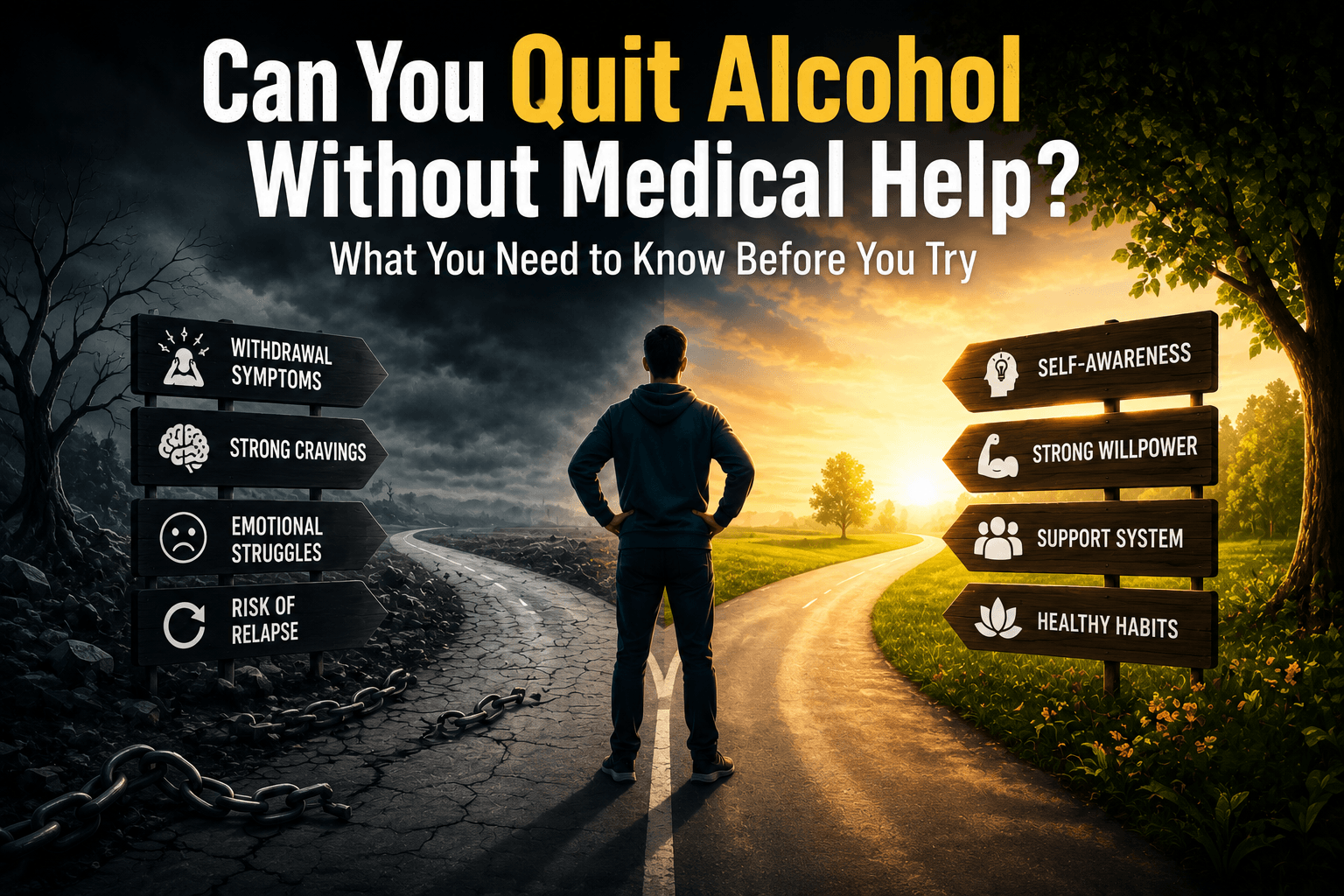
Many people struggling with alcohol addiction ask the same question: Can I quit alcohol on my own? The answer is not as simple as yes or no. Some people with mild alcohol dependence may be able to stop drinking without medical treatment. However, for many others, quitting alcohol suddenly without professional help can be dangerous and, in some cases, even life threatening. Alcohol addiction affects both the body and the brain. Over time, the body becomes dependent on alcohol to function normally. When drinking suddenly stops, the body may react with withdrawal symptoms that range from mild discomfort to serious medical emergencies. This is why seeking professional support is often the safest and most effective way to begin recovery. At We Can Rehab, individuals receive expert medical care, emotional support, and personalized treatment that helps them recover safely while building a healthier future. Before deciding to quit alcohol on your own, it is important to understand the risks, challenges, and safer alternatives.
What Happens When You Stop Drinking Alcohol?
Alcohol slows down the central nervous system. When someone drinks heavily for months or years, the brain adjusts to the constant presence of alcohol. Once alcohol is suddenly removed, the brain becomes overactive because it has become used to functioning with alcohol in the system. This causes alcohol withdrawal. For some people, withdrawal may involve only mild symptoms. For others, it can become a medical emergency that requires immediate treatment. The severity usually depends on how long the person has been drinking, how much alcohol they consume, their overall health, and whether they have experienced withdrawal before.
Common Alcohol Withdrawal Symptoms
Alcohol withdrawal symptoms often begin within a few hours after the last drink. They may become more intense during the first two or three days before gradually improving. Some common symptoms include anxiety, sweating, shaking, nausea, headaches, difficulty sleeping, rapid heartbeat, mood changes, irritability, poor concentration, and strong alcohol cravings. In more severe cases, people may experience confusion, hallucinations, seizures, or a condition known as delirium tremens. These serious complications require immediate medical attention. Ignoring severe withdrawal symptoms can put a person’s life at risk.
Why Quitting Alcohol Alone Can Be Dangerous
Many people believe quitting alcohol is simply a matter of willpower. Unfortunately, addiction is much more complex. When someone who has developed alcohol dependence suddenly stops drinking without medical supervision, the body may react unpredictably. Severe withdrawal symptoms can appear even in people who felt relatively healthy while drinking. Medical professionals can monitor blood pressure, heart rate, hydration, and withdrawal symptoms while providing medications that make detox safer and more comfortable. Without professional care, complications may go unnoticed until they become serious. Recovery should never involve unnecessary risks.
Who Should Never Quit Alcohol Without Medical Help?
Certain individuals should always seek professional medical advice before stopping alcohol. This includes people who drink heavily every day, have experienced alcohol withdrawal in the past, have had seizures, suffer from liver disease or heart problems, have mental health conditions such as depression or anxiety, or use other addictive substances alongside alcohol. Pregnant women with alcohol dependence should also receive immediate medical support before attempting to stop drinking. Professional assessment helps determine the safest treatment approach for every individual.
Can Some People Quit Alcohol on Their Own?
Yes, some individuals with mild alcohol use problems may successfully stop drinking without entering a rehabilitation center. However, even in these situations, medical advice is strongly recommended before making any decision. Healthcare professionals can evaluate the level of alcohol dependence and identify hidden health risks that may not be obvious. Trying to manage withdrawal alone without knowing the risks can be dangerous. There is no shame in asking for help. In fact, it often increases the chances of long term recovery.
The Benefits of Medical Detox
Medical detox is often the first step in alcohol addiction treatment. During detox, trained professionals monitor the patient’s condition while helping manage withdrawal symptoms safely. Medication may be prescribed to reduce discomfort, prevent seizures, control anxiety, and stabilize the body during recovery. Medical detox also prepares individuals for the next stages of treatment, including counseling, therapy, and relapse prevention. Instead of simply removing alcohol from the body, detox creates a safer foundation for lasting recovery.
Recovery Is More Than Just Stopping Alcohol
Many people believe recovery ends once they stop drinking. In reality, quitting alcohol is only the beginning. Long term recovery requires understanding why alcohol became a coping mechanism in the first place. Stress, trauma, relationship problems, anxiety, depression, and low self esteem often contribute to alcohol addiction. Professional rehabilitation programs address these underlying causes through counseling, behavioral therapy, group support, and lifestyle changes. The goal is not only sobriety but also emotional healing and personal growth.
How Residential Rehab Supports Alcohol Recovery
Residential rehabilitation provides a structured environment where individuals can focus completely on recovery. Instead of facing daily triggers and temptations, patients receive continuous support from doctors, therapists, counselors, and support staff. Each day includes therapy sessions, healthy routines, wellness activities, education about addiction, and relapse prevention strategies. Living in a recovery focused environment gives individuals the time, guidance, and confidence needed to rebuild their lives. Many people find that this level of support greatly improves their chances of maintaining long term sobriety.
Why Professional Help Improves Success
Quitting alcohol alone often feels overwhelming. Professional treatment provides much more than medical care. It offers emotional encouragement, practical coping skills, relapse prevention planning, family involvement, and ongoing support after treatment. People who receive comprehensive addiction treatment are often better prepared to handle future challenges without returning to alcohol. Recovery becomes a process of learning, healing, and growing rather than simply resisting cravings.
Self Detox vs Professional Alcohol Rehab
The following comparison highlights the differences between attempting to quit alcohol alone and receiving professional treatment.
Feature | Quitting Without Medical Help | Professional Alcohol Rehab |
Medical supervision | None | Available throughout treatment |
Withdrawal management | Self managed | Safely monitored by professionals |
Risk of severe complications | Higher | Significantly reduced |
Emotional support | Limited | Continuous counseling and therapy |
Relapse prevention | Minimal | Comprehensive planning and education |
Long term recovery support | Usually absent | Structured aftercare and follow up |
Why Choose We Can Rehab?
At We Can Rehab, every recovery journey begins with understanding, compassion, and expert care. The experienced team recognizes that alcohol addiction affects every individual differently. That is why treatment plans are personalized to meet each person’s physical, emotional, and psychological needs. From medically supervised detox and individual counseling to family therapy and relapse prevention, every stage of treatment is designed to help individuals recover safely and confidently. Most importantly, We Can Rehab creates a supportive environment where people feel respected rather than judged, making it easier to focus on healing and lasting recovery.
Final Thoughts
If you are wondering whether you can quit alcohol without medical help, the safest answer is to seek professional guidance before making that decision. While some people with mild alcohol use problems may stop drinking successfully, many individuals with alcohol dependence face serious withdrawal risks that should never be ignored. Recovery is not about proving how strong you are. It is about choosing the safest path toward a healthier life. With the right medical care, therapy, and ongoing support, lasting recovery is possible. If you or someone you love is struggling with alcohol addiction, reaching out for professional help today could be the first step toward a brighter tomorrow.
FAQs
1. Is it safe to quit alcohol suddenly at home?
It depends on the level of alcohol dependence. People with moderate or severe alcohol addiction may experience dangerous withdrawal symptoms. A medical assessment is recommended before stopping alcohol.
2. What are the warning signs of severe alcohol withdrawal?
Severe symptoms include seizures, hallucinations, confusion, high fever, rapid heartbeat, and delirium tremens. These require immediate medical attention.
3. Does We Can Rehab provide medically supervised alcohol detox?
Yes. We Can Rehab offers medically supervised detoxification where trained professionals monitor withdrawal symptoms and provide safe, personalized care throughout the recovery process.
4. What treatment programs are available at We Can Rehab for alcohol addiction?
We Can Rehab provides comprehensive alcohol addiction treatment, including medical detox, residential rehabilitation, individual counseling, group therapy, family counseling, relapse prevention, and aftercare support to help individuals achieve long term recovery.
5. How long does alcohol addiction recovery take?
Recovery is different for every individual. Detox may take several days, while rehabilitation and ongoing recovery can continue for weeks or months depending on personal needs and treatment progress.