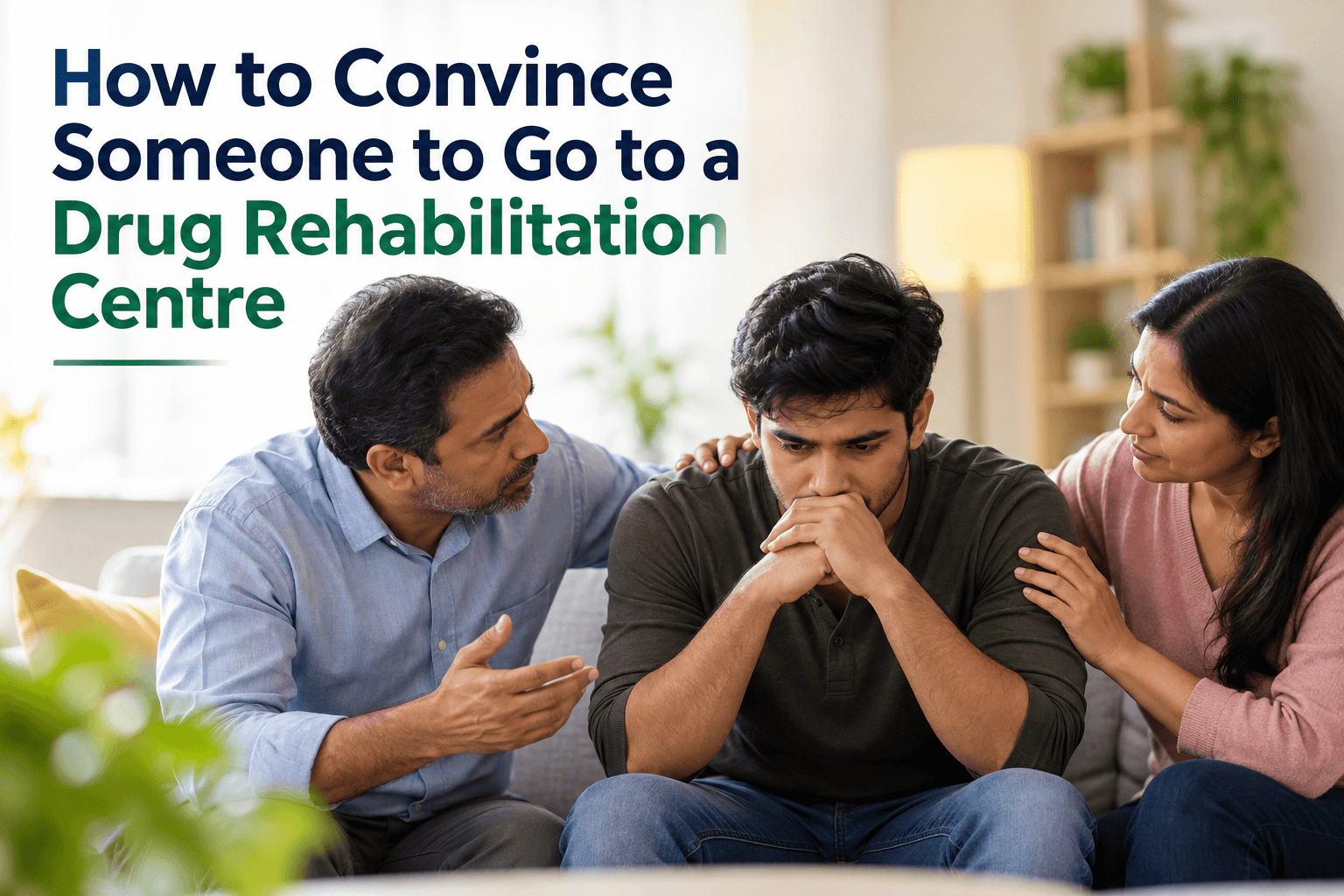
When someone you love is struggling with drug addiction, watching their behaviour change can be heartbreaking. You may notice them becoming distant, losing interest in daily activities, neglecting responsibilities or repeatedly making promises they cannot keep. You may have tried explaining, warning or arguing with them, but nothing seems to work. Perhaps you are worried about their health, relationships, career and future, yet unsure how to make them understand the seriousness of the situation. Convincing someone to consider rehabilitation is not easy, and forcing them may push them further away. What they need is patience, understanding and the right guidance to realise that professional help can give them a chance to rebuild their life.hips, education, work and family life. When someone you love is struggling with substance use, you may feel frightened, helpless or frustrated. You might have tried talking, warning, arguing or making promises, yet nothing seems to change. Convincing someone to consider drug rehabilitation centre is rarely a one-conversation task. It takes patience, empathy, clear information and, when necessary, professional guidance. The aim is not to control or shame the person. It is to help them recognise that support is available and that recovery is possible. A respectful approach can make it easier for someone to accept help without feeling judged or cornered.
Understand Addiction Before Starting the Conversation
Addiction is a complex health condition, not simply a lack of willpower or a character flaw. Repeated substance use can affect the brain systems involved in reward, motivation, memory and decision-making. A person may continue using drugs despite serious consequences and may find it difficult to stop without support. Understanding this can change the way you speak. Instead of saying, “You are ruining your life,” try, “I can see that things have become difficult, and I am worried about your health. Can we talk about what support might help?” The second statement communicates concern without attacking the person.
1. Choose the Right Time and Place
Avoid serious discussions when the person is intoxicated, in withdrawal or angry. Choose a calm, private moment. Do not gather relatives for an unexpected confrontation; it can feel threatening. If a family meeting is needed, plan it with a counsellor’s guidance.
2. Speak with Care, Not Blame
Speak about specific changes, such as missed work, health problems or distance from family. Avoid labels, insults, threats and comparisons. Use “I” statements: “I feel worried about your health” or “I want to help you feel well again.” Listen without demanding an immediate decision. Keep communication open.
3. Listen to Their Fears and Concerns
Ask, “What worries you most about getting help?” Listen without dismissing the answer. The person may fear judgement, withdrawal, costs or separation from home. Acknowledge these concerns and suggest speaking with a professional to understand the options. Never promise instant or guaranteed recovery.
4. Share the Effects of Addiction Without Using Fear
Discuss observable changes in sleep, mood, health, relationships or responsibilities without exaggerating risks. Explain that professional care may include medical assessment, withdrawal management, counselling, psychological support and continuing care. The right plan depends on the substance and the person’s health needs.
5. Explain What Happens at a Rehabilitation Centre
Explain that care should begin with an assessment of physical health, substance use and mental health. A qualified professional can advise whether supervised detoxification or another level of care is appropriate. Counselling may help identify triggers, build coping skills and plan for life after treatment. Ask about staff qualifications, medical arrangements, privacy, costs and aftercare.
6. Offer Practical Help Instead of Only Advice
Offer to research centres, make a call, arrange an appointment or accompany the person for an assessment. Break the process into manageable steps.
Do not secretly admit someone, mislead them about where they are going or use force. Adults should be treated with dignity and their consent and legal rights respected. If there are questions about capacity, immediate danger or involuntary care, seek advice from qualified medical and legal professionals in your area.
7. Involve a Qualified Professional
If conversations are not helping, speak with an addiction counsellor, psychiatrist, psychologist or doctor. You can seek advice even if the person is not ready to attend. Ask how to respond to resistance, set boundaries and avoid unintentionally supporting substance use.
8. Set Boundaries While Continuing to Show Support
Supporting someone does not mean giving money for drugs, hiding harmful behaviour or accepting violence. Set clear boundaries while offering practical help, such as arranging appointments or contacting professionals. Family members should maintain a consistent approach and seek counselling when needed. Before choosing a rehabilitation centre, ask about medical supervision, emergency care, treatment progress and aftercare. Remember, boundaries protect everyone. Small steps, patience and respectful encouragement can help someone move towards recovery.
9. Be Patient and Keep the Door Open
The person may refuse at first. Give them space and revisit the subject calmly. Recognise small steps, such as agreeing to speak with a doctor. A setback does not mean recovery is impossible; treatment plans may need adjustment. Encourage progress while keeping expectations realistic.
10. Know When It Is an Emergency
Call emergency services if the person is unconscious, having a seizure, struggling to breathe, severely confused, experiencing chest pain or showing signs of overdose. Do not leave them alone. If opioid overdose is suspected and naloxone is available, use it as directed and seek emergency care. Withdrawal from alcohol or sedative medicines can also be dangerous. Do not advise someone to stop these substances suddenly without medical guidance. A clinician should assess the risks and recommend a safe plan. In an emergency, prioritise medical care over persuading the person to enter a rehabilitation programme.
Signs That Professional Help May Be Needed
| Signs you may notice | Why assessment matters |
|---|---|
| Repeated unsuccessful attempts to stop | The person may need structured treatment and support. |
| Strong cravings or withdrawal symptoms | A clinician can assess dependence and withdrawal risks. |
| Neglecting work, studies or family duties | Substance use may be affecting daily functioning. |
| Health, mood or sleep changes | Physical and mental health both need attention. |
| Continued use despite serious consequences | Professional assessment can identify suitable care. |
How WE CAN Rehab Can Support the Recovery Journey
WE CAN Youth Welfare Organisation was founded in 2013 and operates a rehabilitation centre in Khurigachi, Sonarpur, Kolkata. Its website describes an integrated approach to addiction recovery that includes detoxification, counselling and psychological rehabilitation. The organisation also highlights access to psychologists, counsellors and psychiatrists, along with a supportive community and evidence-based care. Families considering a drug de-addiction treatment centre in Kolkata should ask about assessment, medical supervision, treatment duration, family communication, safety, fees and follow-up support. WE CAN Rehab also describes follow-up support to help people reintegrate after treatment. Contact the team to confirm current services and suitability; treatment decisions should follow professional assessment.
What Families Should Remember
You cannot create lasting recovery through arguments, guilt or threats. You can make help easier to accept by listening, sharing accurate information and offering practical support. Protect your wellbeing and seek professional advice. Recovery may involve setbacks, but appropriate care and continued support can help people build healthier routines and relationships. If someone close to you is struggling with drugs, begin with one caring conversation. Let them know they are not alone, that treatment is available and that asking for help is a sign of strength.
FAQs
1. What services does WE CAN Rehab provide?
WE CAN Rehab describes services that include detoxification, counselling and psychological rehabilitation. Its website also refers to support from psychologists, counsellors and psychiatrists, as well as an integrated approach addressing physical, psychological and social wellbeing. Contact the centre to confirm which services are currently available and suitable for the individual.
2. Where is WE CAN Rehab located?
WE CAN Youth Welfare Organisation lists its rehabilitation centre at Khurigachi, Sonarpur, Kolkata – 700150. Families can contact the organisation before visiting to confirm directions, appointment arrangements and admission-related information.
3. How can families contact WE CAN Rehab?
The website lists 9051513595 and 6291286297 as contact numbers. Families can call to ask about assessments, treatment options, programme details and the next steps for seeking professional help.
4. Does WE CAN Rehab provide counselling and psychological support?
Yes. The organisation’s website describes counselling and psychological rehabilitation, and mentions access to psychologists, counsellors and psychiatrists. Ask the team how individual support is arranged and whether family counselling is available for your situation.
5. Does WE CAN Rehab offer support after rehabilitation?
WE CAN Rehab’s website states that it provides follow-up support to help people reintegrate into society after treatment. Contact the centre to understand the current aftercare arrangements, counselling access and support available to families after discharge.