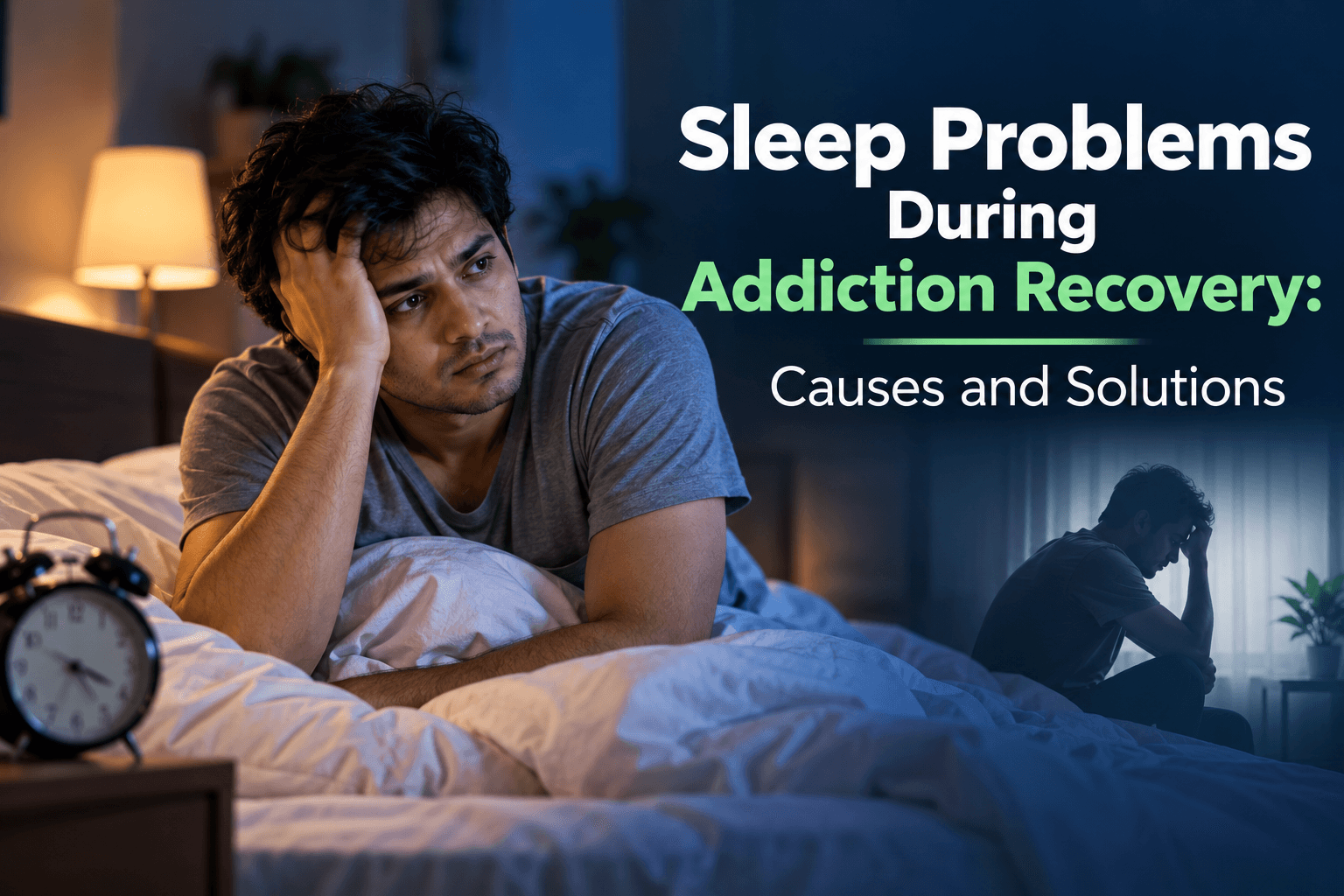
Imagine finally taking the first step towards recovery, staying away from addictive substances and trying to rebuild your daily routine. You expect to feel healthier, but when night comes, sleep becomes difficult. You lie awake for hours, wake up repeatedly or feel tired even after spending the entire night in bed. For many people recovering from drug or alcohol addiction, this can be a frustrating experience. Sleep problems may appear during withdrawal and sometimes continue for weeks or months. They can affect mood, concentration, physical health and motivation. Understanding why sleep gets disturbed during recovery and learning how to manage it safely can make the recovery journey easier.
Why Do Sleep Problems Occur During Addiction Recovery?
- Addictive substances can affect the brain systems responsible for sleep, alertness, mood and the body’s internal clock. During regular substance use, the brain gradually adapts to the effects of these substances. When someone stops or reduces their use, the body needs time to adjust.
- This adjustment can disturb normal sleep patterns. Some people struggle to fall asleep, while others wake up frequently or experience unusual dreams. Certain individuals may feel extremely tired during the day but remain restless at night.
- Sleep difficulties are not always caused by withdrawal alone. Stress, anxiety, depression, medication side effects, physical health conditions and irregular daily routines can also contribute. Sometimes, an underlying sleep disorder may become noticeable during recovery.
- According to the Substance Abuse and Mental Health Services Administration (SAMHSA), sleep problems can occur during withdrawal and may continue for months or even years in some people. This is why sleep should be considered an important part of addiction treatment rather than a minor inconvenience.
Common Sleep Problems Experienced During Recovery
Every person’s recovery experience is different. The type of substance used, duration of use, physical health and treatment plan can influence sleep patterns. Some common problems include:
1. Insomnia
Insomnia is one of the most frequently reported sleep difficulties during addiction recovery. A person may struggle to fall asleep even when feeling physically exhausted. They may spend hours in bed thinking, worrying or feeling restless. Insomnia can make everyday activities difficult because the person does not get enough restorative sleep. It may also increase irritability, anxiety and difficulty concentrating.
2. Frequent Night-Time Awakenings
Some people fall asleep without difficulty but wake up several times during the night. They may find it difficult to return to sleep after waking up. This interrupted sleep can leave them feeling tired and mentally drained the following morning. Stress, withdrawal symptoms and changes in sleep patterns may contribute to the problem.
3. Vivid Dreams and Nightmares
During recovery, some individuals experience unusually vivid dreams or nightmares. These dreams may involve stressful situations, past experiences or substance use. Such experiences can make sleep uncomfortable and sometimes cause people to wake up feeling anxious. If nightmares are frequent or connected to traumatic experiences, professional support may help.
4. Sleeping Too Much
Not everyone experiences insomnia during recovery. Some people sleep for unusually long periods, particularly during the early stages of withdrawal from certain stimulants. The body may need time to recover from prolonged periods of poor sleep and physical exhaustion. However, excessive sleepiness that continues or interferes with everyday life should be discussed with a healthcare professional.
5. Irregular Sleep Schedule
Addiction can disrupt everyday routines. Someone may have become accustomed to staying awake late, sleeping during the day or following unpredictable schedules. After stopping substance use, the body’s natural sleep-wake rhythm may take time to become regular again. Maintaining a consistent routine can help gradually restore healthier sleeping habits.
What Causes Sleep Disturbances During Addiction Recovery?
Understanding the possible causes can help individuals and families choose the right approach.
| Cause | How It Affects Sleep |
|---|---|
| Withdrawal symptoms | May cause restlessness, anxiety, sweating and difficulty sleeping. |
| Changes in brain chemistry | Can temporarily affect the systems that regulate sleep and alertness. |
| Anxiety and stress | May lead to excessive thinking, tension and difficulty falling asleep. |
| Depression | Can contribute to insomnia, early waking or sleeping excessively. |
| Irregular routine | May disturb the body’s natural sleep-wake cycle. |
| Medication side effects | Some prescribed medicines may influence sleep patterns. |
| Existing sleep disorders | Conditions such as sleep apnoea may continue to affect sleep during recovery. |
It is important to remember that sleep problems can have several causes at the same time. A healthcare professional can help identify whether the issue is related to withdrawal, medication, mental health or another medical condition.
Effective Solutions for Sleep Problems During Addiction Recovery
Improving sleep takes time, consistency and the right support. Instead of depending on sleeping pills or other quick solutions, individuals should focus on building healthy habits while addressing any underlying medical concerns.
1. Maintain a Consistent Sleep Schedule
Try to go to bed and wake up at approximately the same time every day. A regular schedule helps the body develop a predictable sleep routine. Avoid changing your bedtime significantly between weekdays and weekends. Even if you do not fall asleep immediately, continue following a consistent waking time unless your healthcare professional advises otherwise. Over time, this routine may help regulate your body’s internal clock.
2. Create a Comfortable Sleeping Environment
Your bedroom should feel calm, comfortable and suitable for rest. Keep the room dark, quiet and cool whenever possible. Avoid unnecessary noise, bright lights and distractions. Use comfortable bedding and try to keep your sleeping space separate from activities such as working, watching television or using mobile phones. A peaceful environment can make it easier to relax before bedtime.
3. Reduce Screen Time Before Bed
Using mobile phones, watching television or scrolling through social media late at night can make it harder to maintain a healthy bedtime routine. Try putting away electronic devices at least 30 to 60 minutes before sleeping. Instead, choose relaxing activities such as reading, listening to calm music or practising gentle breathing exercises. Reducing late-night screen use can help create a more consistent transition between daytime activities and sleep.
4. Include Regular Physical Activity
Physical activity can support overall health, improve mood and help regulate sleep patterns. Walking, light exercise, stretching and other suitable activities may help individuals feel more relaxed. Start with manageable activities and gradually increase them according to your physical condition and medical advice. Avoid intense exercise immediately before bedtime if it makes you feel more alert. Regular daytime activity is generally more helpful than exercising at irregular hours.
5. Follow a Balanced Diet and Stay Hydrated
Recovery can place additional demands on the body. Eating regular, balanced meals and drinking enough water can support general well-being. Include nutritious foods such as vegetables, fruits, whole grains, pulses and protein sources in your daily diet. Avoid going to bed extremely hungry or immediately after a very heavy meal. Also, limit caffeine, especially during the afternoon and evening. Tea, coffee, energy drinks and some soft drinks contain caffeine, which can interfere with sleep.
6. Practise Relaxation Techniques
Stress and excessive thinking can make it difficult to fall asleep. Relaxation techniques may help calm the mind before bedtime. Some options include:
- Deep breathing exercises.
- Gentle stretching.
- Mindfulness and meditation.
- Listening to relaxing music.
- Writing down worries or thoughts in a journal.
Start with a few minutes and choose activities that feel comfortable. These techniques are supportive habits, not replacements for professional treatment when anxiety or other mental health symptoms are severe.
7. Consider Professional Sleep Therapy
If sleep difficulties continue, a healthcare professional may recommend Cognitive Behavioural Therapy for Insomnia (CBT-I). CBT-I is a structured approach that helps individuals understand and change thoughts and behaviours that contribute to insomnia. It may involve improving sleep habits, managing worries about sleep and developing a healthier relationship with bedtime. It can be particularly useful when insomnia continues beyond the initial withdrawal period. A qualified professional can determine whether this approach is suitable.
8. Avoid Self-Medicating with Sleeping Pills
When someone cannot sleep, taking sleeping tablets may seem like an easy solution. However, certain sleep medications can carry risks of dependence, misuse or interactions with other medicines and substances. People recovering from addiction should never start sleeping pills, sedatives or other medication without consulting a qualified healthcare professional. Even over-the-counter sleep products and herbal supplements should be discussed with a doctor. The right treatment depends on the individual’s substance use history, current medicines, medical condition and sleep symptoms.
When Should You Seek Medical Help for Sleep Problems?
Occasional sleep disturbances can happen during recovery, but persistent or severe symptoms should not be ignored. Consider consulting a healthcare professional if:
- You regularly struggle to fall asleep or stay asleep.
- Sleep difficulties continue to affect your daily activities.
- You experience frequent nightmares or severe anxiety at night.
- You feel extremely sleepy during the day.
- You snore heavily, gasp during sleep or experience breathing interruptions.
- You notice worsening depression, unusual confusion or significant changes in behaviour.
Important: Withdrawal from alcohol or certain sedative medicines, including benzodiazepines, can cause serious complications. Do not suddenly stop these substances without medical guidance if you may be physically dependent. Seizures, hallucinations, severe confusion, collapse or breathing difficulties require urgent medical attention.
How Can Rehabilitation Centres Help Manage Sleep Problems?
A structured rehabilitation programme can help individuals address addiction while paying attention to physical and psychological well-being. Sleep difficulties should be discussed during treatment so that the care team can assess their possible causes. Depending on the centre and the individual’s needs, support may include:
- Medical assessment: Healthcare professionals can evaluate withdrawal symptoms, medication use and possible medical causes of sleep disturbance.
- Counselling: Counselling can help individuals manage stress, emotional difficulties and concerns that interfere with sleep.
- Psychological support: Appropriate psychological care can address anxiety, depression and other conditions that may affect sleep.
- Daily routine: A structured routine can encourage regular sleeping, waking, meals and physical activity.
- Follow-up support: Continued guidance can help individuals monitor their progress and discuss sleep difficulties that remain after treatment.
A rehabilitation centre should not promise that sleep will return to normal within a fixed number of days. Recovery is individual, and persistent sleep problems may require additional assessment or specialist treatment.
Conclusion
Sleep problems during addiction recovery can be frustrating, especially when someone is already working hard to rebuild their life. Insomnia, frequent waking, nightmares and irregular sleep patterns may occur as the body adjusts after substance use. However, these difficulties should not be ignored or managed through self-medication. A consistent sleep schedule, healthy daily habits, relaxation techniques and appropriate professional support can help improve sleep over time. Remember, recovery is not only about staying away from addictive substances. It also involves rebuilding physical health, emotional balance and everyday routines that support a healthier future.
FAQs
1. How long do sleep problems last during addiction recovery?
The duration varies from person to person. Some individuals experience sleep disturbances mainly during withdrawal, while others may have difficulties for several weeks or months. Persistent problems should be discussed with a healthcare professional to identify possible causes and suitable treatment.
2. Is insomnia normal after stopping drug use?
Insomnia can occur during withdrawal because substances may affect the brain systems responsible for sleep. The body needs time to adjust after stopping their use. However, severe or ongoing insomnia should be professionally assessed rather than ignored.
3. Can poor sleep increase the risk of relapse?
Sleep difficulties may increase stress, irritability, anxiety and cravings, making recovery more challenging. Poor sleep has been associated with a greater risk of returning to substance use in some people. Addressing sleep problems can therefore be an important part of a recovery plan.
4. What services does WE CAN Rehab provide for addiction recovery?
WE CAN Youth Welfare Organisation describes its services as including detoxification, counselling and psychological rehabilitation. Its website also mentions access to general physicians, psychologists, counsellors and psychiatrists, as well as medical assistance and follow-up support.
5. Where is WE CAN Rehab located in Kolkata?
WE CAN Rehab is located at Khurigachi, Sonarpur, Kolkata – 700150. You can contact the organisation at 9051513595 or 6291286297 to enquire about its addiction rehabilitation services.